
The Ultimate Private School Application Checklist: Your Roadmap to Success
Contents
Introduction
Navigating the private school application process is more than just submitting forms—it’s a strategic journey to showcase your child’s unique potential. Admissions focus on well-rounded students who excel academically, grow personally, demonstrate leadership, and show a passion for learning.
A thorough checklist is essential to tackle this competitive and holistic process. From academic planning and extracurriculars to school research and emotional readiness, every step matters in crafting a strong application. This guide simplifies the journey into actionable steps to help students and parents prepare effectively.
Success isn’t about perfection but authenticity. By presenting your true self with thoughtful preparation, you’ll turn this process into an opportunity for growth and long-term success. Let’s get started!
I. Early Preparation (12-18 Months Before Application)
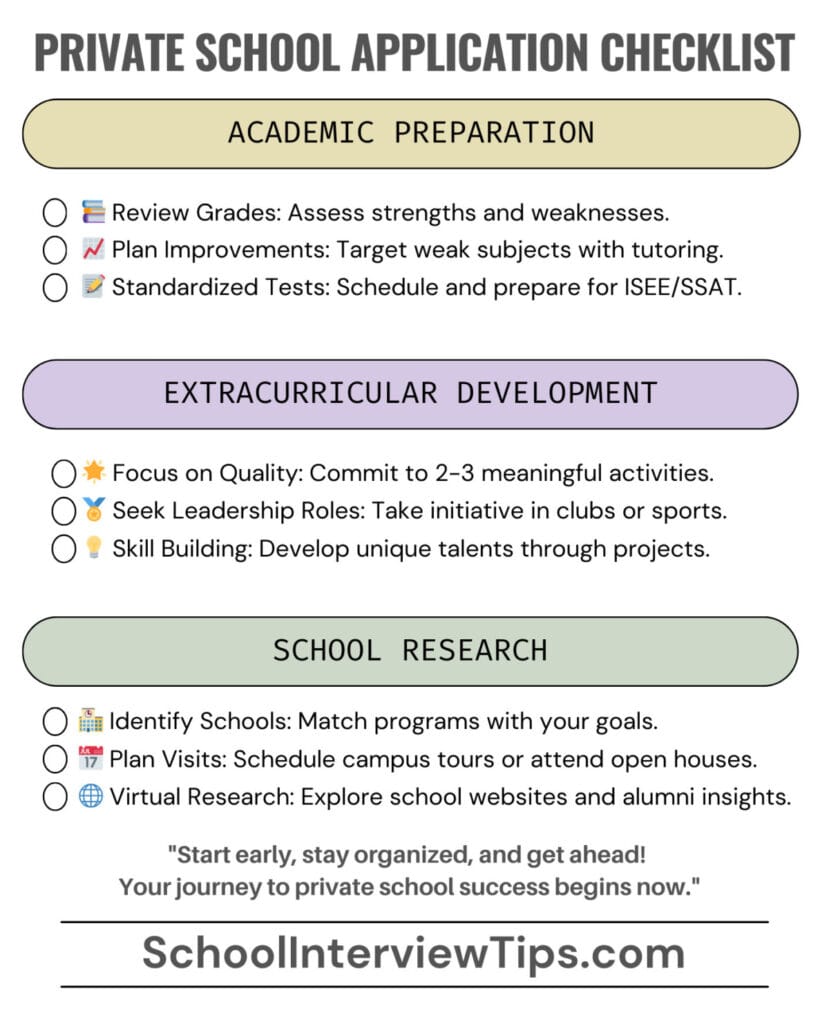
A. Academic Preparation: Laying the Foundation for Success
1. Academic Record Review: Your Educational Blueprint
The journey to a successful private school application begins with a honest, comprehensive assessment of your current academic standing. This is not about creating a perfect transcript, but about understanding your educational landscape and strategically addressing areas of potential growth.
Current Grades Assessment: Conducting a thorough grades analysis goes beyond simply looking at letter grades. Dive deep into:
- Semester and quarterly grade trends
- Performance across different subjects
- Consistency and improvement patterns
- Challenging course selections
- Comparative performance within your current academic environment
Identifying Academic Strengths and Weaknesses: A strategic approach requires brutal honesty and careful analysis:
2. Strengths to Leverage:
- Subjects where you consistently excel
- Areas of natural academic curiosity
- Courses that showcase critical thinking
- Demonstrated ability to handle advanced material
3. Weaknesses to Address:
- Subjects with consistently lower performance
- Areas of academic struggle
- Potential skill gaps
- Subjects requiring additional support
4. Creating an Academic Improvement Plan: Transform weaknesses into opportunities through:
- Targeted tutoring
- Additional study resources
- Supplemental learning materials
- Strategic academic support
- Consistent, measurable improvement goals
B. Standardized Test Preparation: Your Strategic Approach
Standardized tests like ISEE (Independent School Entrance Examination) and SSAT (Secondary School Admission Test) are critical components of your private school application. They provide a standardized measure of academic potential across diverse educational backgrounds.
1. ISEE/SSAT Registration:
- Understand test date options
- Register well in advance
- Choose test date strategically
- Consider multiple test attempts
- Understand age-specific test requirements
2. Test Preparation Strategies:
Diagnostic Assessment
- Take initial practice test
- Identify specific content areas needing improvement
- Develop personalized study strategy
Comprehensive Study Approach
- Balanced study schedule
- Mix of content review and practice tests
- Focus on weak areas
- Time management skill development
Test-Taking Techniques
- Elimination strategies
- Time management skills
- Stress reduction techniques
- Understanding test format and structure
Practice Test Schedule:
- Initial diagnostic test
- Monthly practice tests
- Incremental difficulty progression
- Timed, simulated test environments
- Detailed performance analysis after each test
Tutoring Considerations:
- Individual vs. group tutoring
- Online vs. in-person options
- Credentials and track record of tutors
- Personalized vs. standardized approach
- Budget and time commitment
C. Extracurricular Development: Beyond Academics
Strategic Involvement: Quality Over Quantity
The days of padding college applications with numerous superficial activities are over. Private schools seek depth, passion, and meaningful engagement.
1. Quality Over Quantity Approach:
- Focus on 2-3 core activities
- Demonstrate sustained commitment
- Show progression and impact
- Align activities with personal interests
- Showcase leadership and initiative
2. Depth of Commitment:
- Minimum 1-2 years involvement
- Progressive responsibility
- Tangible achievements
- Personal growth narrative
- Impact beyond participation
3. Leadership Opportunities:
- Team captain roles
- Club leadership positions
- Community project initiation
- Mentorship experiences
- Organizational responsibilities
4. Diverse Activity Selection:
- Academic clubs
- Sports teams
- Community service
- Arts and culture
- Technology and innovation
- Cultural exchange programs
D. Skill Development: Cultivating Your Unique Potential
1. Identifying Unique Talents:
- Self-reflection exercises
- Personality assessments
- Exploring diverse interests
- Recognizing natural inclinations
- Seeking mentorship and guidance
2. Pursuing Meaningful Achievements:
- Set specific, measurable goals
- Seek challenging opportunities
- Document learning process
- Reflect on personal growth
- Create a narrative of development
3. Documenting Extracurricular Accomplishments:
- Maintain detailed activity log
- Collect recommendation letters
- Save projects and presentations
- Create digital portfolio
- Track measurable impacts
By starting this comprehensive preparation 12-18 months before your application, you’re not just preparing for a test or an interview. You’re developing a holistic approach to personal growth that will serve you far beyond the application process.
II. Research Phase (9-12 Months Before Application)
A. School Selection Strategy: Finding Your Perfect Educational Match
1. Initial School Research: Laying the Groundwork
Selecting the right private school is a nuanced process that goes far beyond academic rankings. It’s about finding an educational environment that aligns with your academic goals, personal values, and future aspirations.
2. Academic Program Alignment:
- Curriculum depth and breadth
- Advanced placement opportunities
- STEM and humanities program strengths
- Specialized academic tracks
- Innovative learning approaches
- Research and independent study options
3. School Culture Assessment:
- Mission and core values
- Student diversity
- Classroom interaction style
- Approach to student development
- Emotional and social support systems
- Inclusivity and community engagement
4. Geographic and Financial Considerations:
- Proximity to home
- Transportation options
- Commute feasibility
- Tuition and additional costs
- Financial aid availability
- Scholarship opportunities
- Hidden expenses (uniforms, trips, materials)
B. Comprehensive School Evaluation: Beyond the Brochure
1. Campus Visits: Your Window into School Life
- Schedule official campus tours
- Observe classes in session
- Interact with current students
- Meet faculty members
- Experience campus atmosphere
- Attend student presentations
2. Information Sessions:
- Admissions office presentations
- Parent information nights
- Open house events
- Departmental showcases
- Meet current students and alumni
- Ask in-depth questions about programs
3. Virtual Tour Participation:
- Comprehensive online campus tours
- Interactive digital platforms
- Video interviews with administrators
- Virtual classroom observations
- Student life video documentaries
- Online Q&A sessions
4. Speaking with Current Students and Alumni:
- Formal interview opportunities
- Informal networking events
- Alumni panel discussions
- Social media connection platforms
- Candid program insights
- Real-world experience sharing
C. Application Requirements Tracking: Organizational Mastery
1. Document Compilation: Your Application Toolkit
2. Transcript Request Process:
- Contact current school registrar
- Understand transcript submission protocols
- Request official sealed transcripts
- Verify transcript accuracy
- Ensure timely document processing
- Maintain backup copies
3. Recommendation Letter Strategy:
- Select recommenders strategically
- Choose teachers who know you well
- Provide comprehensive student profile
- Give recommenders ample preparation time
- Offer supporting documentation
- Follow up and express gratitude
4. Test Score Preparation:
- Collect standardized test scores
- Request official score reports
- Understand score submission requirements
- Consider score reporting deadlines
- Prepare score explanation statements
- Highlight score context if necessary
5. Portfolio Compilation:
- Curate academic achievements
- Showcase extracurricular involvement
- Include leadership experiences
- Highlight unique talents
- Organize documents systematically
- Create digital and physical portfolios
6. Strategic Considerations:
- Create a detailed tracking spreadsheet
- Set internal deadlines
- Use digital organization tools
- Develop a comprehensive checklist
- Maintain open communication with schools
- Stay flexible and adaptable
7. Key Takeaways:
- Research is a dynamic, ongoing process
- Cast a wide net initially
- Narrow focus based on deep investigation
- Look beyond surface-level information
- Trust your instincts
- Consider long-term educational goals
8. Recommended Tools:
- Spreadsheet for school comparison
- Digital portfolio platform
- Document scanning and organization apps
- School research databases
- Recommendation letter tracking system
This research phase transforms the application process from a stressful challenge into a strategic, informed journey. By dedicating time to comprehensive research, you’re not just applying to schools—you’re discovering the perfect educational environment that will shape your future.
III. Application Submission Phase (6-9 Months Before Deadline)
A. Application Components Checklist: Assembling Your Application Masterpiece
The application submission phase is a critical moment where preparation meets presentation. Every document you submit tells a part of your unique story, and meticulous attention to detail can make the difference between a good and an exceptional application.
B. Academic Documents: Your Scholarly Portfolio
1. Official Transcripts:
- Request well in advance of deadlines
- Verify complete academic history
- Ensure no missing semester records
- Check for accuracy of grades
- Request sealed, official copies
- Understand each school’s specific transcript requirements
2. Grade Reports:
- Comprehensive academic performance summary
- Highlight consistent performance or improvement
- Include context for any grade fluctuations
- Demonstrate academic progression
- Show rigor of course selection
- Include cumulative GPA and class rank if available
3. Standardized Test Scores:
- Collect all relevant test results
- ISEE/SSAT score reports
- Additional subject-specific test scores
- Advanced placement (AP) or honors exam results
- Ensure scores are sent directly from testing agencies
- Understand score reporting deadlines
4. Academic Awards and Honors:
- Compile comprehensive list of achievements
- Include academic competitions
- Subject-specific awards
- Honor roll recognitions
- Academic excellence certificates
- Research or academic project recognitions
C. Personal Documentation: Establishing Your Identity
1. Birth Certificate:
- Obtain certified copy
- Ensure document is current
- Check name spelling matches other documents
- Verify all information is accurate
2. Passport/Identification:
- Valid government-issued photo ID
- Ensure document is not expired
- Match name across all application materials
- Consider international student requirements
3. Current Photograph:
- Professional, recent headshot
- Neutral background
- Business-appropriate attire
- Clear, high-resolution image
- Reflect your authentic self
- Follow specific school photo guidelines
4. Previous School Records:
- Complete academic history
- Discipline records
- Attendance reports
- Transfer student documentation
- Special education support documents (if applicable)
- Proof of good standing
D. Recommendation Materials: Your Personal Endorsements
1. Teacher Recommendation Letters:
- Select teachers who know you deeply
- Choose from core academic subjects
- Prefer teachers from junior/senior years
- Provide comprehensive student profile
- Discuss academic and personal strengths
- Give recommenders 6-8 weeks notice
2. Counselor Recommendation:
- Schedule early consultation
- Provide comprehensive student overview
- Discuss academic and personal growth
- Include extracurricular achievements
- Address any academic challenges
- Ensure holistic representation
3. Additional Character References:
- Coach recommendations
- Community service supervisors
- Mentorship program leaders
- Extracurricular activity directors
- Showcase diverse perspectives
- Highlight different aspects of character
4. Recommendation Letter Guidelines:
- Provide clear submission instructions
- Offer supporting documentation
- Create recommendation packet
- Include pre-addressed envelopes
- Waive right to view recommendations
- Follow up and express gratitude
E. Strategic Submission Approach
1. Digital Organization:
- Create digital application folder
- Scan all physical documents
- Maintain backup copies
- Use cloud storage
- Organize chronologically
- Ensure high-quality scans
2. Submission Tracking:
- Create comprehensive checklist
- Note individual school requirements
- Track submission deadlines
- Confirm receipt of documents
- Follow up on incomplete applications
- Maintain communication log
3. Common Pitfalls to Avoid:
- Missed deadlines
- Incomplete documentation
- Inconsistent information
- Lack of proofreading
- Generic recommendations
- Overlooking specific school requirements
4. Additional Recommendations:
- Start early
- Be thorough
- Stay organized
- Communicate clearly
- Seek guidance when needed
- Maintain positive attitude
By approaching the application submission phase with strategic precision and comprehensive preparation, you transform a potentially stressful process into a confident, well-executed plan.
IV. Interview Preparation (3-6 Months Before)
The interview phase is your opportunity to make a memorable impression and demonstrate why you’re an ideal fit for the school. This stage is not just about answering questions but about showcasing your personality, values, and how you align with the school’s mission. Strategic preparation can help you shine during this critical step.
A. Preparing for the Interview
1. Mock Interview Practice:
- Schedule practice interviews with parents, teachers, or mentors.
- Use common private school interview questions to simulate a real interview environment. Examples include:
- “Why do you want to attend this school?”
- “What are your greatest strengths and areas for growth?”
- “Tell us about a time you overcame a challenge.”
- Focus on refining answers to highlight key qualities such as leadership, resilience, and curiosity.
2. Presentation Skills:
- Dress to Impress: Choose business-casual or formal attire that reflects your respect for the occasion. Avoid overly casual or distracting outfits.
- Speak with Confidence: Practice speaking clearly and at a moderate pace. Avoid filler words like “um” or “like.”
- Non-Verbal Communication:
- Maintain steady eye contact to convey confidence and engagement.
- Smile naturally to show enthusiasm.
- Use open body language and avoid slouching or crossing your arms.
B. Key Areas to Address During the Interview
1. Why This School?
- Research the school’s mission statement, values, and programs before the interview.
- Prepare to explain how your personal goals align with the school’s offerings.
- For example, “I admire your emphasis on hands-on STEM programs because I’ve always enjoyed building and experimenting in science class.”
- Highlight specific aspects of the school, such as extracurricular opportunities, academic programs, or community values.
2. Personal Strengths and Accomplishments:
- Be ready to discuss your strengths, backed by real-life examples.
- Example: “My greatest strength is my creativity. During my school’s art club, I led a project to create a mural that reflected our school’s diversity.”
- Share significant accomplishments, such as leadership roles, awards, or successful group projects.
3. Scenario-Based Questions:
- Practice responding to hypothetical questions such as:
- “How would you handle a disagreement with a classmate?”
- “What would you do if you saw someone being excluded during group work?”
- Emphasize your problem-solving skills, empathy, and ability to work collaboratively.
C. Tips for Parents (If Applicable)
1. Preparing for Parent Interviews:
- Parents should be ready to discuss their child’s strengths, growth areas, and unique qualities.
- Understand the school’s values and share how your family’s principles align. For instance:
- “Our family values community involvement, which is why we appreciate your emphasis on service learning projects.”
2. Presenting Family Values:
- Highlight your family’s commitment to education and support for your child’s aspirations.
- Avoid overselling or speaking for your child; instead, focus on creating a collaborative impression.
Final Tips for a Successful Interview
- Be Authentic: Schools value genuine students who are eager to grow and contribute. Avoid memorizing scripted answers.
- Practice Active Listening: Listen carefully to questions and take a moment to compose thoughtful responses.
- Ask Questions: Show interest by preparing thoughtful questions about the school. Example: “What leadership opportunities are available for middle school students?”
- Follow-Up: Send a thank-you note or email expressing gratitude for the opportunity to interview. This demonstrates professionalism and enthusiasm.
By investing time and effort into interview preparation, you can confidently present yourself as a well-rounded candidate who is not only prepared for the challenges ahead but also excited to become an active member of the school community.
V. Financial Preparation (3-6 Months Before)
The financial aspect of applying to private schools can be a daunting challenge, but with proper planning, it can become a manageable part of the process. This phase involves understanding tuition costs, exploring financial aid and scholarship opportunities, and budgeting effectively for the application process.
A. Understanding Tuition and Fees
1. Breaking Down Costs:
Private school tuition varies widely depending on location, school reputation, and available resources. In addition to tuition, consider these potential expenses:
- Additional Fees: Registration fees, technology fees, activity fees, and building funds.
- Hidden Costs: Uniforms, textbooks, extracurricular activity costs, transportation, and field trips.
2. Payment Plans:
Many schools offer flexible payment plans to spread tuition costs over several months or terms.
- Evaluate the terms of available payment plans.
- Understand penalties for late payments.
3. Financial Aid Options:
Most schools provide financial aid for families who demonstrate need.
- Research the financial aid policies of each school.
- Contact financial aid offices early for guidance.
B. Financial Aid and Scholarships
1. Need-Based Financial Aid:
- Start by completing the required forms such as the FAFSA (Free Application for Federal Student Aid) or school-specific aid applications.
- Gather necessary documents like tax returns, W-2 forms, and proof of income.
- Be transparent about your financial situation to maximize eligibility.
2. Merit-Based Scholarships:
Scholarships often recognize academic excellence, leadership, or unique talents.
- Research scholarships offered by schools and external organizations.
- Look into scholarships for specific categories such as STEM, arts, athletics, or community service.
3. Crafting Financial Aid Applications:
A compelling financial aid application can make a significant difference.
- Be Accurate: Ensure all financial information is correct and up to date.
- Be Specific: Highlight extenuating circumstances or unexpected financial burdens.
- Meet Deadlines: Submit all forms on time to avoid delays in processing.
C. Budget Planning for the Application Process
The application process itself incurs costs that should be accounted for in your budget.
1. Application Fees:
- Research the cost of application fees for each school.
- Budget for any additional costs related to document submission (e.g., transcripts, test scores).
2. Travel Expenses:
- Factor in costs for school visits, open houses, and interviews.
- Include transportation, lodging, and meals if the school is out of town.
3. Testing Fees:
- Plan for standardized test fees such as ISEE or SSAT registration.
- Budget for retake fees if multiple test attempts are necessary.
4. Tips for Financial Preparation:
- Start Early: Begin financial preparations at least six months before applications are due.
- Keep Records Organized: Maintain a digital folder for financial documents, including tax returns, bank statements, and proof of income.
- Seek Expert Advice: Consult with school financial aid advisors or professional financial planners for tailored advice.
- Plan for Contingencies: Include a small buffer in your budget for unexpected expenses.
By addressing the financial aspects of private school applications early and thoroughly, you can reduce stress and focus on other areas of preparation. This strategic approach will help ensure your application journey is as smooth and successful as possible.
VI. Final Preparations (1-3 Months Before Deadline)
As the application deadline approaches, it’s time to focus on refining and finalizing your application materials. This stage is critical for ensuring that all components are complete, polished, and submitted on time. Meticulous attention to detail during this phase can leave a lasting positive impression on admissions committees.
A. Reviewing and Proofreading
1. Ensuring Completeness and Accuracy:
- Double-check that all required documents are included in each application.
- Verify that personal information, such as names and contact details, matches across all materials.
- Confirm that any supplemental materials (e.g., portfolios or additional essays) are properly formatted and attached.
2. Proofreading Essays and Personal Statements:
- Review all written content for spelling, grammar, and punctuation errors.
- Ensure clarity by eliminating ambiguous or overly complex language.
- Fine-tune the tone to align with the school’s values and culture while keeping your voice authentic.
- Consider asking a trusted teacher, mentor, or professional editor to review your essays for an objective perspective.
3. Double-Checking Document Formats:
- Confirm that documents are saved and uploaded in the required formats (e.g., PDF or Word).
- Ensure that scanned documents, such as transcripts, are clear and legible.
- Verify that file names are labeled appropriately for easy identification by admissions staff.
B. Submission Checklist
1. Verifying Deadlines:
- Create a master calendar with deadlines for each school.
- Set internal deadlines a few days before the official due dates to allow for unforeseen issues.
2. Ensuring All Materials Are Submitted:
- Confirm that test scores (ISEE/SSAT) have been sent directly from testing agencies to the schools.
- Check with your current school to ensure that transcripts and recommendation letters have been sent.
- For online submissions, ensure that all forms and attachments are successfully uploaded and submitted.
3. Tracking and Confirming Submissions:
- Use a tracking spreadsheet to monitor the status of each application component for each school.
- Contact the admissions office if you have not received confirmation of receipt.
C. Follow-Up
1. Sending Thank-You Notes:
- Express gratitude to teachers, counselors, and mentors who provided recommendations or guidance.
- Thank interviewers for their time and reinforce your enthusiasm for the school.
- Keep thank-you notes concise, professional, and sincere.
2. Checking with Schools:
- Reach out to schools to confirm that all application materials have been received.
- Politely inquire about the status of your application if confirmation is delayed.
Pro Tips for Final Preparations:
- Stay Organized: Use a digital or physical folder to keep all application materials in one place.
- Plan Ahead: Avoid last-minute submissions to account for technical difficulties or unforeseen delays.
- Maintain Professionalism: Keep all communication with schools courteous and professional.
- Breathe and Reflect: Take a moment to appreciate your hard work and dedication throughout the application process.
By approaching the final preparations with care and precision, you can ensure that your application is a true reflection of your strengths and aspirations. A polished and well-organized submission signals to admissions committees that you are a thoughtful, prepared candidate ready to excel in their school community.
VII. Post-Submission Phase
The post-submission phase is a time to maintain focus, patience, and professionalism as you await decisions. This period is not just about waiting but about staying proactive and prepared for what comes next.
A. Staying Engaged
1. Academic Excellence:
- Continue striving for strong grades to show consistency and dedication.
- Avoid “senioritis,” as a drop in academic performance can negatively impact admissions decisions.
2. Extracurricular Involvement:
- Stay committed to your current activities and leadership roles.
- Seek opportunities for further impact, such as organizing events or mentoring peers.
3. Personal Growth:
- Explore ways to deepen skills in areas of interest, whether through independent projects, volunteering, or attending workshops.
- Demonstrate ongoing initiative and curiosity, which reflects positively on your character.
B. Preparing for Decision Day
1. Research School Policies:
- Understand how each school communicates decisions (e.g., online portals, mail, or email).
- Familiarize yourself with policies regarding acceptance, waitlists, and rejections.
2. Responding to Offers of Admission:
- Celebrate acceptance but remain mindful of deadlines for confirming your spot.
- Evaluate financial aid packages, program offerings, and school culture before making a final decision.
3. Managing Waitlist Decisions:
- Accept a place on the waitlist if the school is still a top choice.
- Express continued interest through a polite and thoughtful letter to the admissions office.
- Provide updates on significant achievements or awards to strengthen your position.
- Begin considering alternative options to ensure you have a plan in place.
C. Communicating with Schools
1. Updating Schools About Achievements:
- Notify admissions offices of any new awards, honors, or significant accomplishments since submitting your application.
- Keep updates concise and relevant, such as:
- Leadership roles or project milestones.
- Academic recognition or test score improvements.
- Community service impacts or creative achievements.
2. Maintaining Professional Communication:
- Use clear and respectful language in all correspondence.
- Avoid over-communicating or pressuring admissions staff for updates.
- Thank admissions offices for their time and consideration in any follow-up emails.
Final Thoughts for the Post-Submission Phase
Stay Patient: The waiting period can be nerve-wracking, but trust that your preparation and application speak for themselves.
Be Grateful: Whether you receive acceptance, a waitlist offer, or a rejection, appreciate the effort you put into the process and the opportunities ahead.
Embrace Flexibility: Keep an open mind about all potential outcomes, and remember that success is about finding the right fit, not just a single result.
By staying engaged, prepared, and professional during the post-submission phase, you can approach decision day with confidence, ready to embrace the next chapter of your academic journey.
VIII. Conclusion: Setting the Right Mindset
As the private school application process comes to an end, it’s essential to reflect on what truly matters: growth, authenticity, and the valuable lessons learned along the way.
A. Emphasizing Growth Over Perfection
In a world where competition can feel overwhelming, it’s easy to fall into the trap of striving for a flawless application. However, admissions committees aren’t looking for perfection—they’re looking for authenticity.
- Highlight Your True Self: The most compelling applications present a well-rounded and genuine version of the applicant. Let your strengths shine while embracing your growth areas as opportunities for improvement.
- Focus on Character and Effort: Schools value students who demonstrate a willingness to learn, adapt, and contribute. Your passion, perseverance, and authenticity will leave a lasting impression far more impactful than polished but impersonal responses.
- Accept Imperfections: It’s okay if every aspect of your application isn’t perfect. What matters is that it authentically represents who you are and who you aspire to become.
B. Celebrating the Journey
The private school application process is more than a means to an end—it’s an opportunity for growth and self-discovery.
- A Learning Experience: Encourage both students and parents to view the journey as a transformative process. The preparation, interviews, and introspection foster skills and insights that extend beyond the application itself.
- Growth That Lasts: The diligence and self-awareness cultivated during this time will benefit students academically, socially, and personally. These traits set the foundation for success, regardless of the outcome.
- Celebrate Milestones: Take time to appreciate the effort and dedication poured into this process. Every step, from crafting essays to completing interviews, is an achievement worth acknowledging.
Final Thoughts
The private school application journey is about more than gaining admission—it’s about discovering your strengths, embracing challenges, and preparing for future opportunities.
Whether you’re a student excited to explore new academic horizons or a parent supporting your child’s aspirations, remember that this process is a step toward something greater. By focusing on authenticity, celebrating the effort, and maintaining a growth mindset, you’re not just submitting an application—you’re setting the stage for long-term success.
Your story, told with heart and intention, will always be your greatest asset.