
Overcoming Challenges: A Key to Success
Facing challenges is a part of life, whether it’s navigating group dynamics, resolving conflicts with friends, or mastering tough academic subjects like math. These experiences not only test your resilience but also shape your problem-solving and communication skills. In this post, we’ll explore how to tackle these challenges effectively and present your experiences confidently during interviews.
5-Step Template : “What was the challenge you faced, and how you handled it?”
Contents
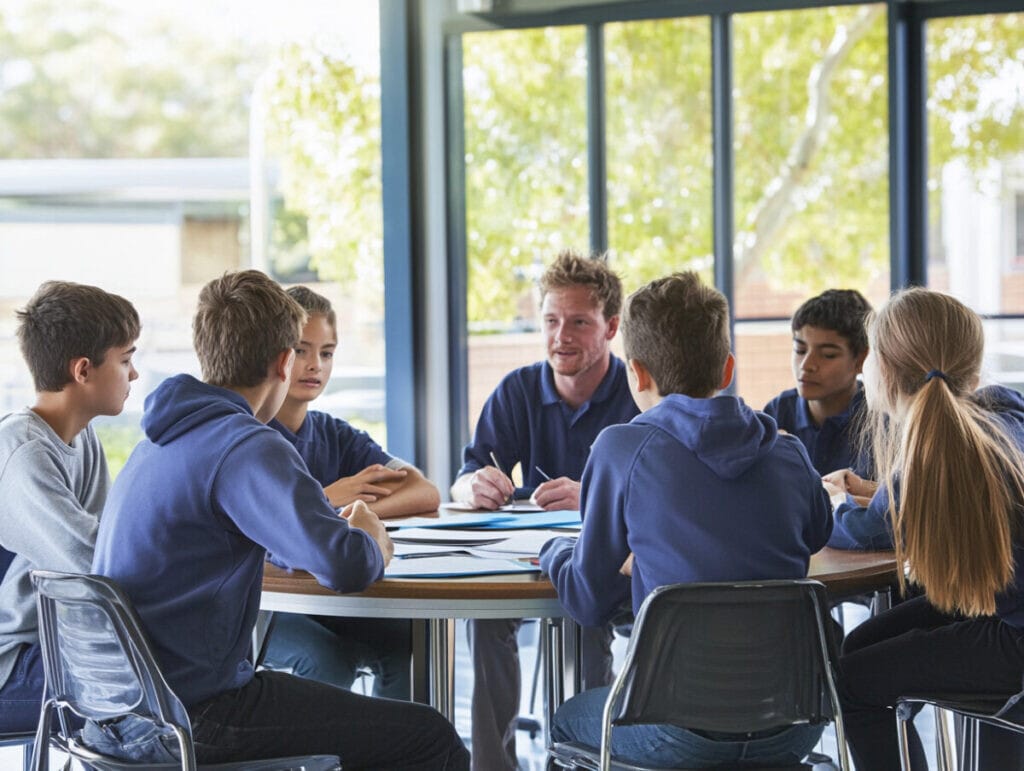
Challenge on a Group Project
Tips Answering Questions About Group Projects
- Highlight your role in the group and the specific challenge your team faced.
- Focus on your leadership, teamwork, or problem-solving skills.
- Show how you ensured the project succeeded despite obstacles.
Step 1: Set the Scene (Describe the Challenge)
- Question :
What was the challenge you faced, and why was it significant?
- Answer:
“In my science class, we were assigned a group project to create a working model of a wind turbine. However, midway through, one of our key team members dropped out due to personal reasons, leaving us short-handed and behind schedule. This was significant because it was worth 30% of our grade, and the deadline was only two weeks away.”
Step 2: Explain Your Role
- Question :
What was your role in addressing the challenge?
- Answer:
“As the team leader, I took responsibility for reorganizing our workflow to compensate for the missing team member. I needed to ensure that tasks were redistributed fairly and that morale remained high, despite the setback.”
Step 3: Detail the Actions You Took
- Question :
What specific actions did you take to resolve the problem?
- Answer:
“I organized an emergency meeting with the remaining team members to reassess the tasks. I reallocated responsibilities, taking on some of the more technical aspects myself, and created a detailed timeline to keep us on track. I also reached out to our teacher for guidance and got approval to streamline some parts of the project to focus on the most critical components.”
Step 4: Share the Outcome
- Question :
What was the outcome of your efforts?
- Answer:
“Despite the setback, we completed the wind turbine on time and it worked flawlessly during the demonstration. Not only did we receive an A for the project, but the teacher also praised our teamwork and problem-solving skills under pressure.”
Step 5: Reflect on the Experience
- Question:
“What did you learn from this experience?”
- Answer:
“I learned the importance of adaptability and strong communication during a crisis. This experience taught me how to stay calm under pressure and lead a team effectively, even when plans don’t go as expected. Now, I feel more confident handling unexpected challenges and ensuring positive outcomes.”
“Watch the Conversation in Action!”
Watch the video to see how the 5-step approach is applied step-by-step for this specific situation. 🎥 Press play and master your response!
Challenge on Relationship with a Friend
Tips Answering Questions About Friendship Conflicts
- Emphasize empathy, communication, and the ability to resolve interpersonal conflicts.
- Show how you maintained the relationship while addressing the challenge.
- Focus on growth, teamwork, and the positive resolution of the issue.
Step 1: Set the Scene (Describe the Challenge)
- Question:
Can you describe a challenge you faced with a friend?
- Answer:
“My best friend and I had a disagreement during a group art project about which design to use for the final piece. The conflict became so intense that we stopped speaking for a few days, and the project deadline was approaching fast. This was challenging because I valued our friendship and also wanted to finish the project successfully.”
Step 2: Explain Your Role
- Question :
What was your role in addressing the challenge?
- Answer:
“As a team member and someone who valued our friendship, I took it upon myself to resolve the issue. I wanted to ensure we could both contribute to the project equally and repair our relationship at the same time.”
Step 3: Detail the Actions You Took
- Question :
What specific steps did you take to handle the situation?
- Answer:
“I started by approaching my friend and apologizing for not fully considering their perspective. Then, I suggested we combine our designs into a single piece to reflect both of our ideas. I worked with my friend to make sure the combined design felt fair and that we were both happy with the outcome.”
Step 4: Share the Outcome
- Question :
What was the result of your actions?
- Answer:
“We created a final piece that included elements from both designs, and it turned out better than either of us expected. Our teacher praised the creativity of our work, and we earned an A on the project. More importantly, my friend and I resolved our disagreement and strengthened our friendship through this experience.”
Step 5: Reflect on the Experience
- Question :
What did you learn from this experience?
- Answer:
“I learned that open communication and compromise are essential in both friendships and teamwork. By listening to my friend and finding a solution that worked for both of us, I realized how important it is to value other people’s perspectives. This experience has helped me become a better collaborator and a more empathetic friend.”
“Watch the Conversation in Action!”
Watch the video to see how the 5-step approach is applied step-by-step for this specific situation. 🎥 Press play and master your response!
Challenge in Math Subject (Tips Apply to Other Subjects Too)
Tips for Answering Questions About Academic Challenges (Applicable to All Subjects)
- Show Initiative: Highlight how you identified the problem and took steps to address it.
- Leverage Resources: Emphasize how you used tools like teachers, peers, or online resources to overcome the challenge.
- Demonstrate Persistence: Illustrate your dedication through consistent practice or creative problem-solving.
- Share Improvement: Focus on measurable results, such as better grades or increased confidence.
- Reflect on Growth: Connect the experience to skills like time management or problem-solving that apply across subjects.
Step 1: Set the Scene (Describe the Challenge)
- Question :
Can you describe a math challenge you faced?
- Answer:
“In my algebra class, we had a test coming up on quadratic equations, but I struggled to understand the concept. Despite studying on my own, I couldn’t solve many of the practice problems, which made me worried about failing the test.”
Step 2: Explain Your Role
- Question :
What was your role in addressing the challenge?
- Answer:
“I realized it was my responsibility to find a way to improve before the test. I took the initiative to identify where I was struggling and sought help from resources available to me.”
Step 3: Detail the Actions You Took
- Question :
What specific steps did you take to overcome the challenge?
- Answer:
“I approached my teacher after class to ask for clarification on quadratic equations and requested additional practice problems. I also joined a study group where we worked through problems together and helped each other with different techniques. At home, I watched online tutorials and practiced solving equations every day.”
Step 4: Share the Outcome
- Question :
What was the outcome of your efforts?
- Answer:
“When I took the test, I felt much more confident and was able to solve all the quadratic equation problems. I ended up scoring 92%, which was one of the highest grades in the class. My teacher even complimented me on my improvement.”
Step 5: Reflect on the Experience
- Question :
What did you learn from this experience?
- Answer:
“I learned that persistence and asking for help are key when facing a challenge. It’s okay to admit when you don’t understand something and to seek support from others. This experience also taught me the value of consistent practice, which I now apply to other subjects when I encounter difficulties.”
This example demonstrates how academic challenges can be overcome through proactive problem-solving, collaboration, and dedication. These strategies can apply equally to other subjects like science (e.g., mastering lab techniques), language arts (e.g., improving essay writing), or history (e.g., preparing for a major research project).
“Watch the Conversation in Action!”
Watch the video to see how the 5-step approach is applied step-by-step for this specific situation. 🎥 Press play and master your response!