
Answering Parent Interview Questions for Parents of a 3-Year-Old Boy or Girl
Contents
Introduction:
When preparing for a parent interview for your 3-year-old child, the approach is distinctively different from interviews for older children. At this young age, schools are less concerned with academic achievements or structured extracurriculars and more focused on understanding your child’s personality, early developmental milestones, and how you, as parents, provide a supportive environment for growth. The goal of the interview is to assess whether your child will thrive in the school’s environment and how well your family aligns with the school’s philosophy of early childhood education.
6 Key Differences for Parents of 3-Year-Olds vs. Older Children

1. Focus on Development, Not Accomplishments
Unlike interviews for older children, where specific achievements or skills are highlighted, the focus here is on your child’s developmental progress. Schools want to understand how your child explores the world, interacts with others, and navigates early milestones like language development, fine motor skills, or learning to share.
Example:
Instead of emphasizing that your child can write their name or count to 20, talk about how they love exploring colors while painting or how they’re learning to express themselves in simple sentences.
2. Play and Curiosity Are Key Indicators
At age three, learning is primarily driven by play and curiosity. Schools value children who show an interest in exploring their surroundings, experimenting with new ideas, and engaging in imaginative play.
Example:
You might describe how your child enjoys building towers with blocks, invents stories with their toys, or asks curious questions like, “Why does the sun go to sleep?”
3. Social and Emotional Development Take Center Stage
Unlike older children, where academic skills may dominate the conversation, schools for 3-year-olds focus heavily on social and emotional readiness. They want to know how your child interacts with peers, handles transitions, and expresses their emotions.
Example:
Discuss how your child is learning to share toys, take turns, or adapt to changes like starting preschool or meeting new people.
4. Parenting Approach Matters More Than Child’s Independence
For older children, schools often assess how independent they are. For 3-year-olds, schools are more interested in your parenting style—how you encourage your child’s growth, support their emotional needs, and create opportunities for early learning.
Example:
Instead of focusing on how your child independently completes tasks, describe how you guide them through challenges, such as encouraging them to try new foods or clean up toys after playtime.
5. Family-School Fit Is a Priority
Schools at this stage look for families who share their values and approach to early childhood education. They want parents who will partner with them to create a nurturing and stimulating environment for the child.
Example:
Highlight how your family values play-based learning, emotional growth, and fostering curiosity—values that align with the school’s mission.
6. Developmental Challenges Are Normal
Schools understand that children at this age are still developing critical skills like self-regulation, listening, or following instructions. Parents should feel comfortable discussing these challenges while framing them positively.
Example:
If your child is learning to manage frustration when a puzzle is difficult, describe how you support them in finding solutions or taking breaks.
How to Tailor Your Responses for a 3-Year-Old
1. Be Honest About Your Child’s Development
Schools don’t expect perfection. If your child struggles in certain areas, such as adapting to new environments or sharing toys, acknowledge it and share how you’re supporting them.
Example:
“Leo sometimes gets shy in new situations, but we’ve been practicing meeting new people by organizing small playdates, and he’s starting to feel more comfortable.”
2. Focus on Specific Examples
Concrete examples help bring your child’s personality and development to life. Instead of saying “He’s very curious,” share a story:
Example:
“Last weekend, he spent 30 minutes watching ants in the backyard and asking me how they carry things bigger than themselves. He even tried to build a tiny ‘bridge’ for them with sticks!”
3. Highlight Collaborative Efforts Between Parent and Child
Emphasize how you work as a team with your child to foster growth. Schools want to see parents who are actively involved but not overly controlling.
Example:
“When he’s building with blocks, I encourage him to think about how to make his tower taller without falling, and we celebrate together when he figures it out.”
4. Showcase Play-Based Learning
Play is the foundation of learning for a 3-year-old. Share how your child engages in meaningful play at home.
Example:
“Leo loves playing with his toy kitchen. He pretends to ‘cook’ meals for us, which has been a fun way for us to teach him new words and even basic math, like counting spoons or measuring cups.”
5. Emphasize Social Growth Without Pressure
Discuss how your child interacts with peers and family, but don’t worry if they’re not fully confident socially yet. Schools understand this is a developmental journey.
Example:
“He enjoys playing with his cousins and is starting to learn how to take turns. While sharing isn’t always easy, we’ve been working on it by encouraging him to exchange toys during playtime.”
6. Speak Positively About Challenges
Frame any areas for growth as natural parts of being three, and highlight how you’re supporting your child in overcoming them.
Example:
“Sometimes Leo gets frustrated when he can’t figure out how a toy works, but we’ve been teaching him to take deep breaths and ask for help when he needs it.”
7. Tone and Style for the Interview
Be Warm and Positive: Share your stories with enthusiasm and pride. Even small milestones, like recognizing colors or singing along to songs, are meaningful at this age.
Show Partnership: Demonstrate that you value collaboration with the school and are eager to support your child’s journey.
Stay Realistic: It’s okay if your child hasn’t mastered everything yet—schools appreciate honesty and a growth mindset more than perfection.
By keeping these developmental differences in mind, you’ll provide thoughtful, age-appropriate answers that showcase your 3-year-old son’s unique qualities and your supportive parenting approach.
10 Common Parent Interview Questions for Parents of a 3-Year-Old Child
1. Tell us about your child. What are their personality traits and interests?
Schools want to get a sense of your child’s character. This is an opportunity to share their unique personality, preferences, and emerging talents.
2. How does your child interact with peers and adults?
This question assesses your child’s social skills, such as their ability to play with other children, share, or communicate with unfamiliar adults.
3. What activities does your child enjoy at home or during playtime?
Share examples of how your child spends their time, including favorite toys, books, or types of play, to highlight their natural curiosity and creativity.
4. How does your child handle new environments or transitions?
Schools want to understand how your child adjusts to changes, like starting a new routine or meeting new people, as these experiences will shape their preschool transition.
5. What are your child’s strengths and areas where they are still developing?
Provide a balanced view of your child’s growth. Mention skills they excel in, like fine motor or language development, and areas where they’re still learning, like self-regulation or following instructions.
6. How do you support your child’s learning and development at home?
Share your approach to fostering learning through play, reading, or other activities, and how you encourage their curiosity and engagement.
7. Why are you interested in this school for your child?
Schools want to know how their philosophy aligns with your values and goals for your child’s early education.
8. How do you handle challenges or setbacks with your child?
This question assesses your parenting style and how you support your child in moments of frustration, such as dealing with tantrums or overcoming small failures.
9. How do you encourage independence in your child?
Share how you give your child age-appropriate responsibilities, such as cleaning up toys or choosing their clothes, to foster autonomy.
10. What are your goals for your child’s early education experience?
Schools want to understand your priorities, whether it’s social skills, emotional growth, curiosity, or a balance of structure and play.
Tips for Answering These Questions:
– Be honest and focus on age-appropriate development.
– Highlight your child’s individuality with specific examples.
– Show a willingness to partner with the school to support your child’s growth.
Inspiring Examples of Parent Interview Perspectives
Liam: The Energetic Explorer
Reflects his active and enthusiastic nature and his love for discovering new things.
1. Tell us about your child. What are their personality traits and interests?
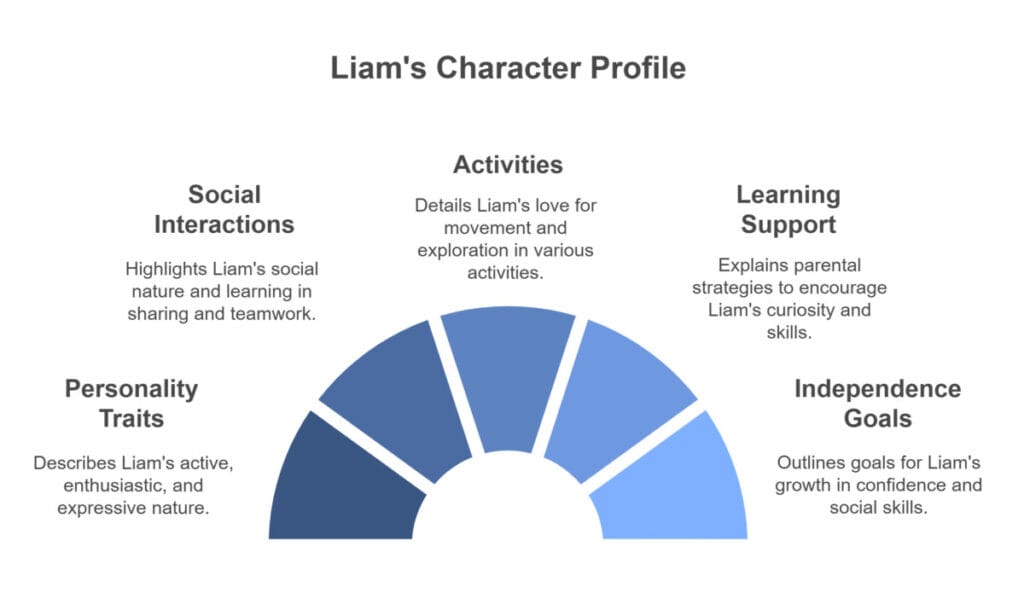
“Liam is an active, enthusiastic little boy who is always on the go. He has a natural curiosity and loves exploring his surroundings, whether it’s building sandcastles at the park or examining how his toys fit together. He’s also very expressive—he enjoys storytelling, and we often catch him making up stories with his toy dinosaurs. What makes him unique is his boundless energy combined with a warm and caring personality. He’s always quick to share his excitement with others, whether it’s about spotting a bird or mastering a new skill.”
2. How does your child interact with peers and adults?
“Liam is very social and loves making new friends, but he’s still learning to navigate some aspects of sharing and taking turns—like most kids his age. When playing with peers, he tends to take the lead in activities and enjoys games that involve running or teamwork, such as tag. With adults, he’s friendly and curious, often asking lots of questions to learn more about the world around him. For instance, when he meets someone new, he might ask, ‘What’s your favorite animal?’ or ‘Do you like dinosaurs too?'”
3. What activities does your child enjoy at home or during playtime?
“Liam is very active and loves anything that involves movement. He spends hours playing with his toy cars, building tracks, or creating obstacle courses in the living room. He also enjoys outdoor activities like riding his scooter and digging in the sandbox. At home, he loves reading picture books, especially ones about animals and vehicles, and he’s starting to show an interest in simple arts and crafts, like finger painting or making collages.”
4. How does your child handle new environments or transitions?
“Liam is generally excited about new experiences and adapts quickly, but he does best when he has some preparation. For example, before starting his current preschool program, we talked a lot about what to expect, visited the school, and introduced him to his teachers. He can get a little shy at first, especially in unfamiliar settings, but once he warms up, he dives right in and participates enthusiastically.”
5. What are your child’s strengths and areas where they are still developing?
“Liam’s biggest strengths are his creativity, enthusiasm, and problem-solving skills. He loves figuring out how things work, like how to fit pieces of a puzzle together or how to build the tallest block tower without it falling. One area where he’s still developing is his patience—he can get frustrated when things don’t go as planned, like if his tower topples over. We’re working on teaching him how to take deep breaths and try again when he encounters challenges.”
6. How do you support your child’s learning and development at home?
“We encourage Liam’s natural curiosity by incorporating learning into everyday play. For example, we read books together daily and ask questions about the stories to spark his imagination. We also use outdoor activities, like a walk in the park, to teach him about nature—he loves spotting animals and learning their names. At home, we have puzzles, building blocks, and art supplies that help him develop problem-solving and fine motor skills. We also make sure to have plenty of unstructured playtime to let him explore and be creative.”
7. Why are you interested in this school for your child?
“We’re drawn to your school because of its emphasis on play-based learning and fostering creativity, which are a great match for Liam’s energetic and curious personality. We also love that your program focuses on developing social skills and independence, which are areas we feel will help Liam grow. Your outdoor play areas and hands-on learning approach resonate with our family’s values of exploration and curiosity.”
8. How do you handle challenges or setbacks with your child?
“When Liam faces challenges, like struggling to complete a puzzle or feeling frustrated when he can’t get something right, we focus on encouraging a growth mindset. We acknowledge his feelings and guide him to take a break if needed. For example, when he was learning to put his shoes on by himself, he would get upset if he couldn’t get it right. We taught him to pause, try again, and celebrate small victories. Over time, he’s learned to be more patient and persistent.”
9. How do you encourage independence in your child?
“We encourage Liam’s independence by giving him small, age-appropriate responsibilities, like putting his toys away after playtime or choosing which shirt to wear in the morning. We also involve him in simple tasks, like helping to set the table or water the plants, which makes him feel proud and accomplished. While we’re always there to guide him when needed, we make sure to let him try things on his own first, which builds his confidence.”
10. What are your goals for your child’s early education experience?
“Our main goal is for Liam to develop a love of learning and to feel confident and happy in a school environment. We hope he can build strong social skills, like working with others and expressing himself, while also exploring his natural curiosity and creativity. We want him to see school as a place where he can try new things, make friends, and grow emotionally and intellectually.”
Final Note
These answers highlight Liam’s unique traits and personality while providing specific examples to illustrate his growth and potential. They also demonstrate your active involvement as a parent and your alignment with the school’s values.
Andrew: The Gentle Thinker
Highlights his calm, thoughtful personality and his observant approach to the world.
1. Tell us about your child. What are their personality traits and interests?
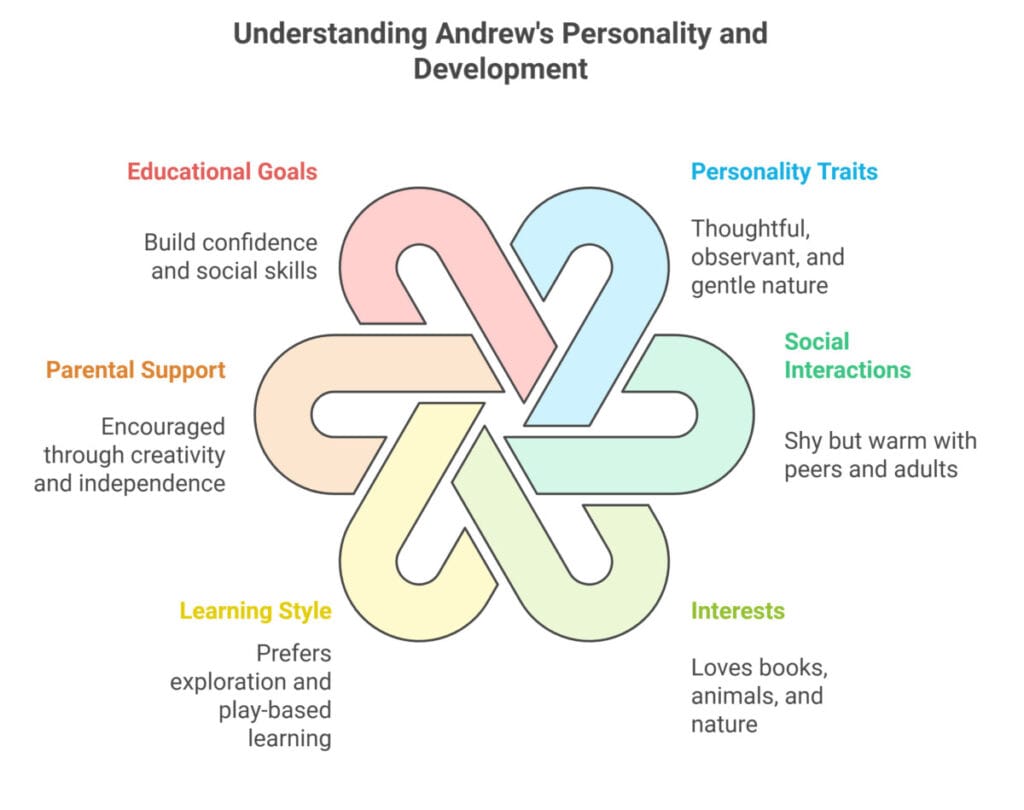
“Andrew is a thoughtful, observant, and gentle boy who takes his time to understand the world around him. He has a quiet curiosity and enjoys watching and listening before diving into an activity. He loves books, especially ones about animals and nature, and often spends time flipping through the pages and asking us about the pictures. Andrew has a creative side, too—he enjoys drawing and creating little stories about his artwork. His calm, reflective nature makes him very easygoing and a joy to be around.”
2. How does your child interact with peers and adults?
“Andrew is a bit on the shy side when he meets new people but warms up quickly once he feels comfortable. With peers, he prefers smaller groups or one-on-one play, where he can really connect and focus on shared activities like building or storytelling. He’s very considerate and often observes before joining in, but he’s always willing to share and help others. With adults, he’s polite and curious, often asking thoughtful questions once he feels at ease.”
3. What activities does your child enjoy at home or during playtime?
“Andrew loves quiet, focused activities like drawing, reading books, or putting together puzzles. He has a big imagination and enjoys creating stories with his toy animals or acting out scenes with his stuffed animals. He also enjoys spending time outdoors, where he likes collecting leaves and watching birds. While he’s not as active as some children his age, he gets excited about activities that allow him to explore and learn at his own pace.”
4. How does your child handle new environments or transitions?
“Andrew is a bit cautious in new environments and usually needs a little time to adjust. We’ve found that if we prepare him in advance by talking about what to expect, he feels much more confident and ready to engage. For example, when we visited his new preschool for the first time, we talked about the teachers and the toys he’d get to play with, which made him more comfortable. Once he feels settled, he fully engages and enjoys himself.”
5. What are your child’s strengths and areas where they are still developing?
“Andrew’s biggest strengths are his focus and creativity. He can spend a long time on activities like puzzles or drawing, and he loves to make up elaborate stories about the animals he reads about in his books. One area where he’s still developing is his confidence in larger social settings—he can be a bit shy at first, but we’re helping him practice speaking up and trying new things.”
6. How do you support your child’s learning and development at home?
“We encourage Andrew’s learning by following his interests and incorporating them into everyday activities. For example, since he loves animals, we read books about them and even visit the zoo to spark his curiosity. At home, we provide him with plenty of art supplies to explore his creativity, and we work on puzzles together to help him develop problem-solving skills. We also have quiet reading time every evening, which he looks forward to as a way to wind down and learn new things.”
7. Why are you interested in this school for your child?
“We’re drawn to your school because of its focus on nurturing each child’s unique strengths and its emphasis on creativity and exploration. Andrew thrives in environments where he can take his time to explore and process, and your program’s emphasis on play-based learning feels like the perfect fit for his personality. We also appreciate the small class sizes and the focus on fostering social-emotional development, which we feel will help Andrew grow his confidence and build connections with his peers.”
8. How do you handle challenges or setbacks with your child?
“When Andrew faces a challenge, like trying a new activity or meeting new people, we focus on encouraging him at his own pace. We talk through what’s making him feel unsure and help him take small, manageable steps forward. For example, when he was nervous about trying a new playground, we first explored it together and talked about how much fun he’d have on the slides and swings. By taking things slowly, he was able to build confidence and enjoy himself.”
9. How do you encourage independence in your child?
“We encourage Andrew’s independence by giving him choices in his daily routine, like deciding what book to read before bed or which shirt to wear in the morning. He also helps with small tasks around the house, like setting the table or organizing his toys. Because he likes to think things through, we encourage him to take his time and figure out solutions on his own, like when he’s working on a tricky puzzle. It’s wonderful to see how proud he feels when he accomplishes something on his own.”
10. What are your goals for your child’s early education experience?
“Our goal is for Andrew to build confidence in himself and enjoy learning in a supportive and nurturing environment. We hope he’ll develop strong social skills and build friendships while continuing to explore his creativity and curiosity. We also want him to feel excited about coming to school every day and see it as a place where he can try new things and grow emotionally, socially, and intellectually.”
Final Note
These answers showcase Andrew’s thoughtful, calm, and creative personality while addressing his developmental needs in a positive light. They demonstrate a strong understanding of his unique traits and provide specific examples of how he engages with the world, making him feel like a real individual in the eyes of the school staff.
Luna: The Social Butterfly
Captures her outgoing, imaginative, and people-oriented character.
1. Tell us about your child. What are their personality traits and interests?
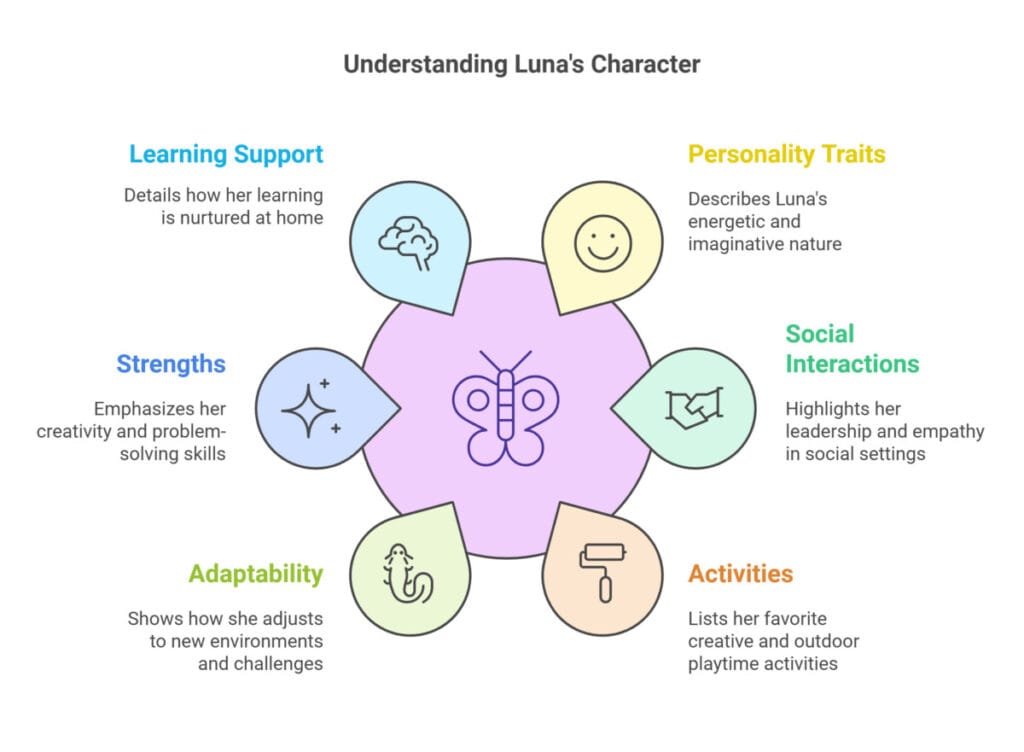
“Luna is a bright, outgoing, and imaginative little girl who lights up every room she enters. She has a natural ability to connect with people, whether it’s chatting with family members, making friends at the park, or even saying hello to strangers on a walk. She’s full of energy and creativity, often inventing pretend play scenarios with her dolls or acting out stories she’s heard. Luna’s curiosity about the world keeps us on our toes, as she’s always asking thoughtful questions like, ‘Why do flowers close at night?’ or ‘How do birds fly?’”
2. How does your child interact with peers and adults?
“Luna loves being around people and thrives in social settings. With peers, she’s a natural leader, often initiating group play and coming up with creative games for everyone to enjoy. She’s also very empathetic—if someone feels left out, she’s quick to include them. With adults, Luna is chatty and curious, asking lots of questions and sharing stories about her day. She’s confident and enjoys learning from those around her.”
3. What activities does your child enjoy at home or during playtime?
“Luna loves pretend play and often sets up elaborate tea parties with her stuffed animals or builds ‘castles’ out of blankets and pillows. She’s also very musical—she enjoys dancing to songs, singing along, and even making up her own little tunes. Another favorite activity is arts and crafts, where she can use glitter, markers, and stickers to create colorful masterpieces. Outdoors, she enjoys running, climbing, and playing games like tag with her friends.”
4. How does your child handle new environments or transitions?
“Luna is excited by new environments and adapts quickly, especially when there’s something fun to explore or someone new to meet. That said, she can get a little impatient if the transition takes too long, like waiting for an activity to begin. We’ve been working on helping her understand the importance of patience, and she’s learning to take deep breaths or keep herself entertained while waiting.”
5. What are your child’s strengths and areas where they are still developing?
“Luna’s biggest strengths are her creativity, social skills, and curiosity. She’s a great problem-solver and loves thinking outside the box to find solutions, especially during pretend play or building activities. One area where she’s still developing is learning to manage her energy during quieter tasks. For example, she sometimes rushes through puzzles or gets distracted, but we’re helping her focus by turning it into a game or breaking the task into smaller steps.”
6. How do you support your child’s learning and development at home?
“We encourage Luna’s learning by incorporating her interests into daily activities. For example, since she loves stories, we read books together every evening, and she often helps us come up with alternate endings for fun. We also engage her creativity by providing plenty of materials for art projects and encouraging her pretend play. Outdoors, we explore nature together, pointing out plants, animals, or interesting things she notices, which helps nurture her curiosity and observational skills.”
7. Why are you interested in this school for your child?
“We’re impressed by your school’s focus on creativity, social-emotional development, and active learning. Luna thrives in environments where she can express herself and explore her ideas, and we feel your program’s emphasis on imaginative play and collaborative activities would be a perfect match for her. We also appreciate the strong sense of community your school fosters, as Luna loves connecting with others and would thrive in such a nurturing environment.”
8. How do you handle challenges or setbacks with your child?
“When Luna encounters a challenge, like not being able to figure out how to build something with her blocks, we first acknowledge her feelings and encourage her to take a step back and try again. We’ve found that turning challenges into a game or creating a fun ‘story’ around them helps keep her engaged. For example, if she’s frustrated about putting together a puzzle, we might say, ‘Let’s imagine this is a treasure map we need to solve!’ This approach keeps her motivated and turns frustration into excitement.”
9. How do you encourage independence in your child?
“We encourage Luna’s independence by letting her make choices throughout the day, like deciding what to wear, which book to read, or what activity to do during playtime. We also give her responsibilities she enjoys, like helping to set the table or tidying up her toys after play. She loves feeling like she’s part of the team, and we make sure to praise her efforts to build her confidence and reinforce her sense of responsibility.”
10. What are your goals for your child’s early education experience?
“Our goal is for Luna to continue developing her social skills, creativity, and love of learning in a supportive environment. We want her to feel confident and excited about coming to school, where she can explore her ideas, build meaningful friendships, and discover new interests. We also hope she’ll learn to balance her energy and focus during group activities or quieter tasks, preparing her for more structured learning experiences as she grows.”
Final Note
These answers emphasize Luna’s energetic, creative, and social nature, while also addressing her developmental needs in a positive and age-appropriate way. They reflect an understanding of her unique character and highlight how her strengths align with the school’s values, ensuring she’s portrayed as an engaging and eager learner.
Emily: The Quiet Nurturer
Emphasizes her calm, empathetic, and detail-focused personality.
1. Tell us about your child. What are their personality traits and interests?
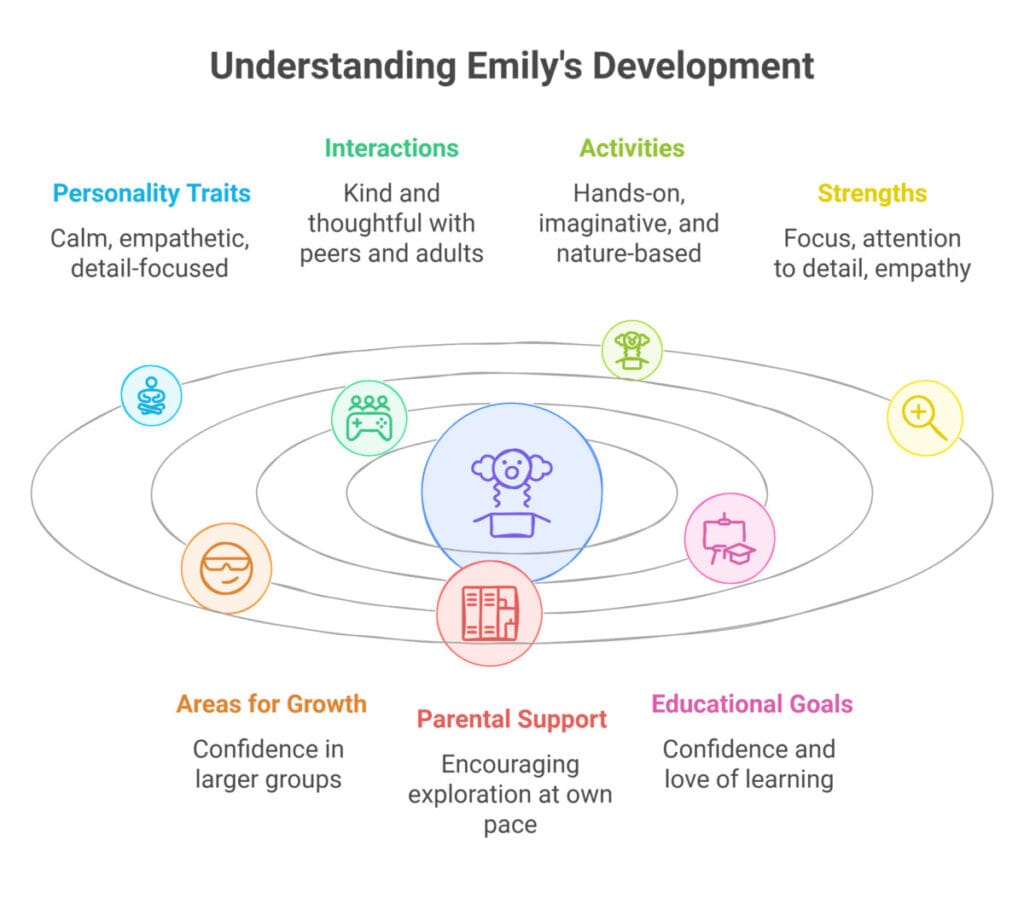
“Emily is a calm, observant, and nurturing little girl who approaches the world with curiosity and care. She has a natural tendency to notice small details, whether it’s a tiny flower in the garden or how her blocks fit perfectly together. Emily enjoys quiet activities, like reading picture books or completing puzzles, and she often surprises us with her ability to focus for long periods. What sets her apart is her gentle and empathetic nature—she’s always looking out for others, whether it’s comforting a friend or helping a younger cousin pick up their toys.”
2. How does your child interact with peers and adults?
“Emily is very kind and thoughtful in her interactions with others. With peers, she enjoys cooperative play, like building together or working on art projects side by side. She tends to gravitate toward children who share her calm demeanor, but she’s also very patient and accommodating with more energetic friends. With adults, she’s polite and attentive, often observing quietly before engaging in conversation. Once she feels comfortable, she’ll happily ask questions or share her thoughts.”
3. What activities does your child enjoy at home or during playtime?
“Emily loves activities that allow her to use her hands and her imagination. She enjoys building with blocks, creating patterns with her beads, and painting with watercolors. Reading is also a big part of her day—she loves sitting with her favorite picture books and pointing out details in the illustrations. Outdoors, she likes exploring nature at her own pace, collecting leaves, and watching bugs. She also enjoys quiet pretend play, like taking care of her toy animals or setting up a pretend ‘garden’ with her play flowers.”
4. How does your child handle new environments or transitions?
“Emily takes her time to adjust to new environments. She prefers to observe quietly at first, taking in her surroundings before joining in. We’ve found that giving her some time and space to settle in helps her feel more confident. For example, when we visited her preschool for the first time, we stayed with her for a few minutes while she explored the room, and she quickly became comfortable enough to start playing with the toys and interacting with the other children.”
5. What are your child’s strengths and areas where they are still developing?
“Emily’s strengths lie in her focus, attention to detail, and empathy. She’s very good at noticing patterns, solving puzzles, and engaging in thoughtful play. One area where she’s still developing is building confidence in larger group settings—she tends to be more reserved when there are a lot of people around. We’re working on encouraging her to feel comfortable expressing herself in bigger groups while respecting her need for a bit of space.”
6. How do you support your child’s learning and development at home?
“We support Emily’s learning by providing activities that match her interests and allow her to explore at her own pace. We read books together every day and encourage her to ask questions or talk about the pictures. She also enjoys hands-on activities like sorting objects by color and shape, and we use these moments to introduce basic concepts like counting or patterns. When we’re outside, we take the time to observe nature together, which sparks her curiosity and helps her learn about the world around her.”
7. Why are you interested in this school for your child?
“We’re drawn to your school because of its focus on nurturing each child’s unique qualities and providing a calm, supportive environment for learning. Emily thrives in settings where she can explore at her own pace and engage in hands-on, creative activities, which aligns with your school’s approach. We also appreciate your emphasis on social-emotional development, as we feel it will help Emily build confidence in group settings and develop meaningful connections with her peers.”
8. How do you handle challenges or setbacks with your child?
“When Emily faces a challenge, like struggling to complete a puzzle or feeling nervous in a new situation, we focus on encouraging her to take her time and try again. We also talk through her feelings and reassure her that it’s okay to make mistakes. For example, if she gets frustrated while building something, we suggest taking a break and coming back to it later. This approach helps her feel more relaxed and confident about working through challenges.”
9. How do you encourage independence in your child?
“We encourage Emily’s independence by giving her opportunities to make choices, like selecting her clothes for the day or deciding which book to read at bedtime. She also has small responsibilities around the house, like watering her plants or tidying up her toys. Since she enjoys focused tasks, we make sure to give her enough time to complete them at her own pace, which helps her feel capable and confident in her abilities.”
10. What are your goals for your child’s early education experience?
“Our goal for Emily is to help her build confidence and continue developing her love of learning in a supportive environment. We hope she’ll learn to feel comfortable expressing herself in group settings while maintaining her thoughtful, observant nature. We also want her to explore new interests and develop friendships with her peers, all while feeling happy and excited about coming to school each day.”
Final Note
These answers highlight Emily’s calm, focused, and empathetic personality while providing insight into how her parents nurture her development. The responses are tailored to her unique traits, demonstrating an understanding of her strengths and areas for growth, and aligning with what schools value in young learners.
Drew: The Bold Adventurer
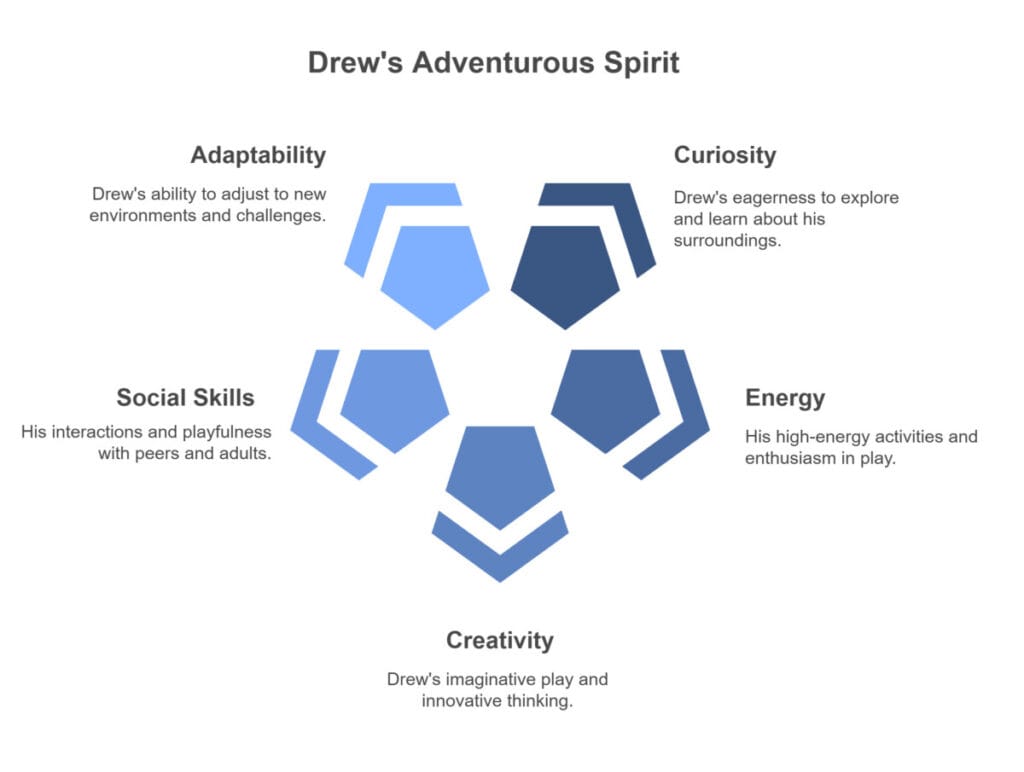
Represents his high-energy, fearless, and curious spirit.
1. Tell us about your child. What are their personality traits and interests?
“Drew is a spirited, adventurous, and energetic little boy who loves to explore the world around him. He’s naturally curious and always eager to try new things, whether it’s climbing a new structure at the playground or figuring out how his toys work. Drew is bold and confident, often leading the way in group play or coming up with new games. He has a great sense of humor, and his playful personality brings a lot of joy to everyone around him.”
2. How does your child interact with peers and adults?
“Drew is very outgoing and thrives in social settings. He loves playing with other children and is often the one to start a game or suggest an activity. While he enjoys being in the center of the action, he’s also learning to take turns and share, as his enthusiasm sometimes gets the better of him. With adults, Drew is curious and talkative, often asking questions or proudly showing off his latest ‘adventure,’ whether it’s a drawing he made or a trick he learned on the jungle gym.”
3. What activities does your child enjoy at home or during playtime?
“Drew loves anything that lets him move and explore. He spends a lot of time running, jumping, and climbing, and he’s especially fond of building obstacle courses out of cushions or boxes. He also enjoys imaginative play, often pretending to be a superhero, pirate, or explorer. When he’s indoors, he likes playing with construction toys like blocks or magnetic tiles, creating towers or structures that he knocks down with glee just to build them again.”
4. How does your child handle new environments or transitions?
“Drew is usually excited about new environments and dives right into exploring them. He’s very adaptable and curious, which helps him adjust quickly. However, he can sometimes be a bit impulsive in his excitement, wanting to touch or try everything at once. To help him ease into transitions, we talk about what to expect and set clear boundaries, which gives him the structure he needs to feel confident.”
5. What are your child’s strengths and areas where they are still developing?
“Drew’s biggest strengths are his curiosity, energy, and creativity. He has an incredible ability to turn everyday objects into part of an adventure and is always finding new ways to engage with his surroundings. One area where he’s still developing is learning to channel his energy during quieter activities, like sitting through a story or focusing on a task. We’re working on helping him build patience by breaking activities into shorter segments and giving him opportunities to move between them.”
6. How do you support your child’s learning and development at home?
“We support Drew’s learning by encouraging his love of movement and exploration. For example, we create obstacle courses in the backyard to help him work on his problem-solving and coordination. We also read together every night, choosing books that match his interests, like stories about dinosaurs or adventures. When he’s doing hands-on activities like building with blocks, we guide him to think about how to make his structures sturdier, which helps him develop focus and critical thinking.”
7. Why are you interested in this school for your child?
“We’re drawn to your school because of its emphasis on active, hands-on learning and the balance it provides between structure and exploration. Drew thrives in environments where he can move, create, and discover, and your play-based approach seems like a perfect match for his energy and curiosity. We also appreciate your focus on social-emotional learning, as we believe it will help Drew develop his patience and teamwork skills.”
8. How do you handle challenges or setbacks with your child?
“When Drew encounters challenges, like struggling to finish a puzzle or feeling frustrated during a new activity, we focus on helping him take a step back and try again. He’s very determined, so we frame setbacks as part of the adventure, saying things like, ‘Let’s figure out another way to solve this!’ This keeps him engaged and excited to keep going. We’ve also been working on teaching him calming strategies, like taking deep breaths, which he’s starting to use on his own.”
9. How do you encourage independence in your child?
“We encourage Drew’s independence by giving him tasks that match his adventurous nature, like picking out his clothes, packing his backpack for outings, or helping in the kitchen by stirring or pouring ingredients. We also give him space to explore and figure things out on his own, stepping in only when he asks for help. He’s proud of himself when he accomplishes something independently, whether it’s climbing a new structure or completing a small task around the house.”
10. What are your goals for your child’s early education experience?
“Our goal is for Drew to channel his energy and curiosity into meaningful learning experiences. We hope he’ll build confidence in his ability to work on quieter, focused activities while continuing to thrive in environments that allow him to explore and be creative. We also want him to develop strong social skills, like teamwork and patience, while making connections with peers and discovering new interests that excite him.”
Final Note
These answers reflect Drew’s spirited, adventurous, and high-energy personality while addressing the developmental needs and goals that come with his natural curiosity and boldness. They emphasize his strengths and highlight how you, as parents, support his growth while also helping him work on areas like focus and patience in a positive way.