
The STAR Method to Excel in School Interviews: A Step-by-Step Guide for Students and Parents
Navigating school interviews can be challenging, especially when trying to showcase skills and character in a limited time. The STAR method—Situation, Task, Action, Result—provides an effective framework to craft compelling responses that leave a lasting impression. Here’s how students and parents can use the STAR method to ace private school interviews.
Contents
What is the STAR Method?
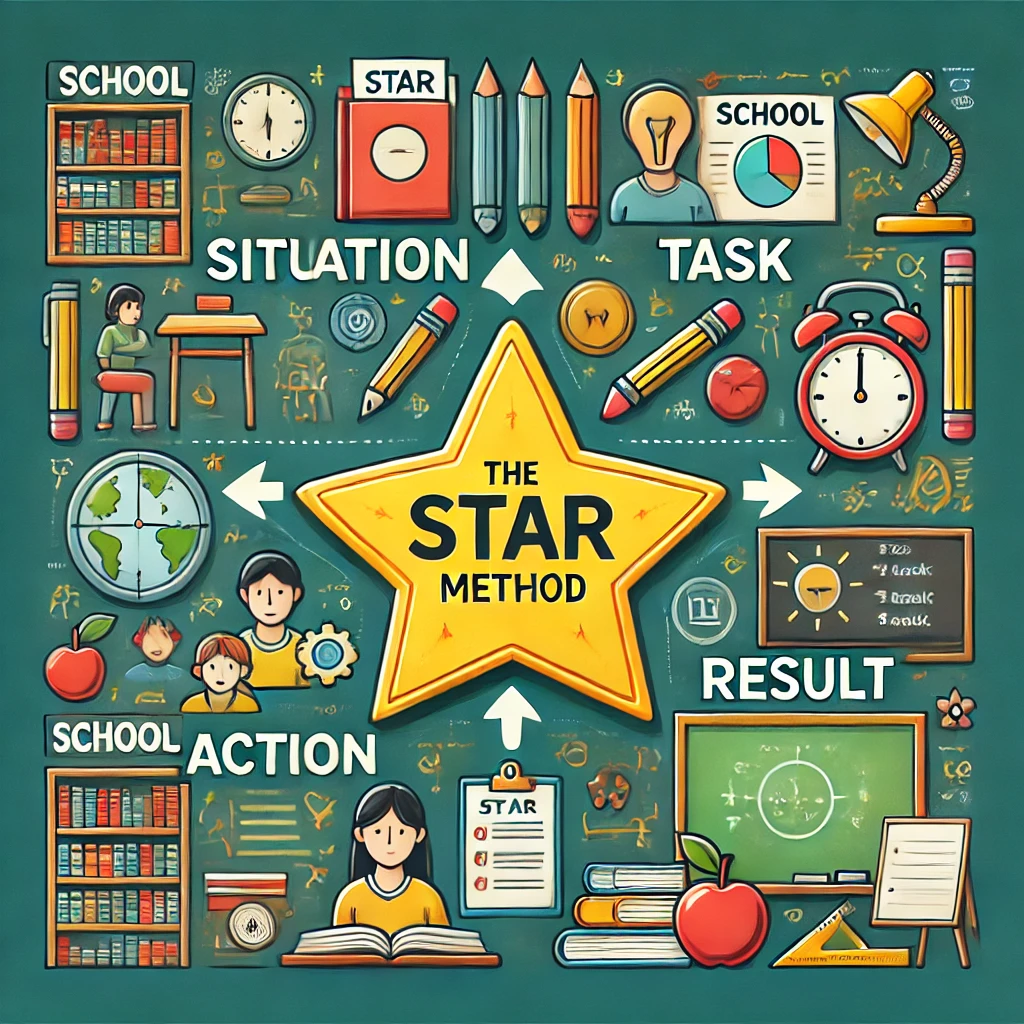
The STAR method organizes your responses into a clear, easy-to-follow structure. It helps students provide specific examples to demonstrate their strengths, problem-solving skills, and teamwork capabilities.
How STAR Works:
- Situation: Set the stage by describing the context.
- Task: Explain your role or responsibility in the scenario.
- Action: Detail the steps you took to address the task.
- Result: Share the outcome, ideally with measurable or meaningful impact.
Why Schools Value the STAR Method
Private schools often use behavioral questions to understand how students handle challenges, collaborate with peers, and contribute to a community. These questions provide insight into character and emotional intelligence, key qualities for success in a private school environment.
Common Behavioral Questions:
- “Tell me about a time when you worked on a team.”
- “Describe a situation where you overcame a challenge.”
- “What’s an example of a time you showed leadership?”
Using the STAR method ensures that students give structured, thoughtful, and impactful answers that highlight their potential to thrive in the school’s community.
Breaking Down the STAR Method
Let’s explore how each step works and how students can apply it:
S – Situation
Provide context for your story by describing the setting and challenge.
- What to Include:
- Who was involved?
- Where and when did it happen?
- What was the challenge or opportunity?
- Example: “During a group project in science class, we were tasked with building a model of the solar system, but one of our teammates wasn’t contributing.”
T – Task
Explain your specific role or responsibility in the situation.
- What to Include:
- Your assigned role or goal.
- The objective you needed to achieve.
- Example: “As the team leader, it was my job to ensure everyone contributed and that we met our deadline.”
A – Action
Describe the specific steps you took to handle the task.
- What to Include:
- Highlight your initiative and problem-solving skills.
- Include collaborative efforts or creative approaches.
- Example: “I spoke with the team member privately to understand their concerns. Then, I re-assigned smaller tasks that matched everyone’s strengths and created a schedule to keep us on track.”
R – Result
Share the outcome and its impact. Whenever possible, use metrics or tangible results.
- What to Include:
- The positive results of your actions.
- Feedback received or lessons learned.
- Example: “We completed the project on time and earned an A. My classmate later thanked me for helping them feel more included in the team.”
How to Prepare STAR Responses
Preparation is key to using the STAR method effectively. Follow these steps to craft polished responses:
1. Reflect on Relevant Experiences
Encourage students to think about meaningful moments from academics, extracurricular activities, or community involvement.
- Examples to Consider:
- Leadership in a club or team.
- Solving a problem in a group project.
- Helping a peer or teacher with a challenging task.
2. Practice with Common Questions
Rehearse answers using STAR for typical school interview questions:
- “Can you tell me about a time you demonstrated leadership?”
- “What’s an example of overcoming a challenge?”
- “Describe a time you worked on a team.”
3. Focus on Specifics
The key to an impactful answer is clarity and detail.
- Avoid generalities like, “I helped my group finish the project.”
- Instead, say: “I created a schedule, divided tasks, and followed up with each member to ensure we stayed on track.”
Example STAR Response for a School Interview
Question: “Tell me about a time you overcame a challenge.”
S – Situation:
“During a debate competition, our team was given a topic we weren’t familiar with just a day before the event.”
T – Task:
“My job was to research arguments and organize our main points within a tight timeframe.”
A – Action:
“I divided research topics among the team, created a shared document for collaboration, and practiced rebuttals to strengthen our case.”
R – Result:
“We delivered a strong performance and advanced to the finals. The judges praised our teamwork and preparation.”
Tips for Parents Helping Students
- Encourage Reflection: Help your child think about their experiences and articulate lessons they’ve learned.
- Role-Play Practice: Act as the interviewer and provide constructive feedback on STAR responses.
- Focus on Growth: Emphasize stories that show personal growth and resilience over perfection.
Why the STAR Method Works for Private School Interviews
- Demonstrates Character: Highlights traits like teamwork, leadership, and problem-solving.
- Provides Structure: Keeps responses organized and easy for interviewers to follow.
- Makes Students Memorable: Showcases unique experiences that make the applicant stand out.
Common Mistakes to Avoid
- Too Much Detail: Focus on the most relevant aspects of the story.
- No Clear Result: Always highlight the impact of your actions.
- Generic Examples: Use specific, personal stories to demonstrate authenticity.
Conclusion
The STAR method is a powerful tool for private school interviews. By practicing structured, thoughtful answers, students can confidently showcase their skills, character, and potential.
Call to Action for Parents and Students:
Start practicing the STAR method today to prepare for a successful interview. Explore more interview tips in our “Private School Admission Guide” section!
Learn the STAR Method for Behavioral Interviews with MIT’s Guide
20 Confidence-Boosting Phrases to Crush Your School Interview
10 Powerful Tips to Ace Your School Interview for Guaranteed Success
7 Mistakes to Avoid in School Interviews and 7 Essential Body Language Tips
The Art of Storytelling in School Interviews
How to Show Emotional Intelligence in a School Interview: Tips for Success