
4 Examples of Q&A About ‘Tell Me About Yourself’ with Tips
Contents
Question 1: Can you tell me about yourself?
👩🏫Teacher:
Can you tell me about yourself?
👧Student:
Sure! My name is Marie and I’m in 7th grade. I love being creative, especially through drawing and writing. I also really enjoy science—especially learning about how things work in the natural world. One of my favorite things to do is explore new ideas and put them into my art. I feel like it helps me understand things in a different way. Outside of school, I’m part of a hiking club, and we go on nature hikes once a month. It’s a lot of fun, and it’s taught me to notice the little details around me, which I think also helps with my art and my curiosity in science.
👩🏫Teacher:
That sounds amazing! So you’re combining your love for creativity with your interest in science and nature.
👧Student:
Yes, exactly! I think it’s fun to look at how things connect, like how science can inspire creativity. It’s one of the things I really enjoy, and I’m always excited to learn more about it.
1. Start with a Strong Introduction
- Tip: Begin with your name, grade, and one or two core aspects of your identity that define who you are.
- Advice: Avoid listing too many random details. Instead, focus on aspects of your personality, interests, or activities that reflect your unique qualities.
- Example: “My name is Marie, and I’m in 7th grade. I enjoy being creative, especially through drawing and writing, and I have a strong interest in science.”
2. Highlight Your Passions and Interests
- Tip: Share activities or subjects you’re genuinely passionate about. These passions give insight into who you are and what drives you.
- Advice: Provide examples that showcase your enthusiasm, such as hobbies, favorite subjects, or extracurricular activities.
- Example: “I love exploring how things work in the natural world, and I often bring that curiosity into my art and writing. For instance, I enjoy using my drawings to explore scientific ideas.”
3. Show How Your Interests Connect
- Tip: Make connections between your passions to paint a cohesive picture of your personality.
- Advice: Highlight how your hobbies, activities, or studies complement each other, as this demonstrates thoughtfulness and multidimensional interests.
- Example: “I think it’s fascinating how science can inspire creativity, like noticing patterns in nature and using them in my art.”
4. Include Extracurricular Activities
- Tip: Mention activities you participate in outside of school to give a well-rounded view of your character.
- Advice: Focus on activities that highlight teamwork, dedication, or growth.
- Example: “I’m part of a hiking club that goes on nature hikes every month. It’s a lot of fun, and it’s helped me develop an eye for details, which also improves my art and curiosity in science.”
5. Be Genuine and Positive
- Tip: Speak authentically about what excites you.
- Advice: Avoid giving rehearsed or overly polished answers. Instead, let your natural enthusiasm shine.
- Example: “I really enjoy learning and exploring new ideas, whether through art or science. It’s something that makes me excited about school and life.”
General Tips for Success:
- Keep It Brief but Engaging: Your answer should be concise but meaningful, ideally no longer than 1-2 minutes.
- Balance Academic and Personal Interests: Schools appreciate students who are academically curious but also have diverse interests outside the classroom.
- Practice, but Don’t Memorize: Rehearse your answer to gain confidence, but don’t make it sound robotic.
- End on a High Note: Conclude with a positive statement that ties your interests together or hints at your enthusiasm for learning.

Question 2: What makes you unique compared to other students?
👩🏫Teacher:
What makes you unique compared to other students?
👧Student:
I think what makes me unique is how I blend creativity with my interest in science and nature. Not everyone combines those interests in the same way, but for me, they’re really connected. For example, when I go hiking, I like to bring my sketchbook and draw what I see, especially plants and animals. It helps me remember things better, and I’ve started to understand the details and patterns in nature a lot more. I think my unique approach helps me notice things that others might miss.
👩🏫Teacher:
That’s really interesting! So, your creativity and curiosity work together to help you see things from a different perspective.
👧Student
Yes, definitely. I feel like being able to draw and observe things closely makes me more aware, and I think that’s something a bit unique about me compared to other students.
This question is an opportunity to differentiate yourself and highlight qualities that make you stand out. Here’s how to craft a meaningful and genuine response based on the example conversation
1. Focus on a Unique Combination of Interests
- Tip: Highlight a blend of skills, hobbies, or passions that might not commonly go together.
- Advice: Show how these interests interact and make you unique. In the example, blending creativity with science and nature is the student’s unique trait. You could use a similar approach to showcase your distinctive combination of passions or strengths.
- Example: “I think my ability to combine art with observing nature gives me a unique perspective. It’s not something everyone does, and it helps me connect science with creativity.”
2. Emphasize What Sets You Apart
- Tip: Highlight specific behaviors or approaches that reflect your individuality.
- Advice: Avoid generic qualities like “hardworking” or “friendly.” Instead, focus on something specific to you, such as a unique habit, skill, or way of thinking.
- Example: “When I go hiking, I always bring my sketchbook to draw the plants and animals I see. It’s something I enjoy, and it helps me notice details that others might overlook.”
3. Show How Your Unique Traits Benefit You or Others
- Tip: Explain how your unique qualities help you grow or make a difference.
- Advice: Connect your uniqueness to personal development, academic success, or contributing to your community. This makes your answer meaningful and relevant.
- Example: “Drawing what I see in nature helps me remember details better and understand patterns. It’s helped me become more observant and curious, which I think is valuable in both art and science.”
4. Be Genuine
- Tip: Share something you genuinely believe sets you apart.
- Advice: Authenticity is key to making a strong impression. Don’t exaggerate or invent qualities to seem impressive. Instead, reflect on what truly makes you unique and articulate it confidently.
General Tips for Success:
- Prepare in Advance: Think about specific qualities, skills, or experiences that make you stand out.
- Be Specific: Use real examples or stories to illustrate your unique qualities.
- Link to the School’s Values: Tailor your response to align with the school’s culture or priorities, such as creativity, innovation, or curiosity.
- Keep It Balanced: Be confident about your uniqueness but avoid sounding arrogant or overly rehearsed.

Question 3: What’s one thing most people don’t know about you?
👩🏫Teacher:
What’s one thing most people don’t know about you?
👧Student:
One thing most people don’t know about me is that I actually keep a nature journal. Whenever I go hiking or spend time outside, I bring my journal to write down observations, sketch plants or animals I see, and even make notes about things I want to research later. It’s kind of like my own little science and art project. I don’t really talk about it with many people, so I think it would surprise them to know how much time I spend on it.
👩🏫Teacher:
Wow, a nature journal! That sounds like such a great way to combine all of your interests.
👧Student:
Yes, it’s really special to me because it lets me explore my creativity and curiosity in one place. And it helps me keep track of what I’ve learned and what I still want to discover.
1. Choose Something Authentic and Meaningful
- Tip: Select an activity, trait, or experience that genuinely reflects who you are but isn’t widely known.
- Advice: Avoid generic or surface-level answers like “I like music.” Instead, focus on something personal and meaningful, like a unique hobby or a habit you value.
- Example: In the student’s example, a nature journal combines creativity and curiosity in a surprising way, making it both authentic and interesting.
2. Connect Your Answer to Personal Growth
- Tip: Explain how this hidden aspect contributes to your development or reflects your values.
- Advice: Show the interviewer why this unknown fact is important to you and how it helps you grow as a person.
- Example: “My nature journal allows me to combine my love for art and science. It helps me stay curious, document my discoveries, and even inspires new things to learn.”
3. Highlight Your Passions and Interests
- Tip: Use this question as an opportunity to reinforce your enthusiasm for your interests or hobbies.
- Advice: Tie your response back to a broader passion that aligns with your personality and goals. This gives the interviewer a clearer picture of who you are.
- Example: “It’s a way for me to explore my creativity and curiosity while staying connected to nature, which I really enjoy.”
4. Make It a Conversation Starter
- Tip: Choose an answer that naturally leads to follow-up questions or discussion.
- Advice: Avoid overly complex or obscure topics that might confuse the interviewer. Instead, pick something engaging that encourages dialogue.
- Example: The nature journal is an excellent choice because it invites curiosity and allows the interviewer to ask more about the student’s observations, sketches, or favorite discoveries.
5. Avoid Clichés
- Tip: Stay away from overused answers like “I love helping people” unless you can provide a unique and personal example.
- Advice: The goal is to stand out with an unexpected or intriguing response while staying genuine. Think about what makes you unique.
Tips
- Reflect on Your Hobbies or Interests: Think about activities or traits that are meaningful to you but aren’t widely known.
- Focus on What Makes You Special: Use this question to emphasize qualities that differentiate you from others.
- Keep It Positive: Share something inspiring or uplifting about yourself rather than focusing on negative or overly personal details.
- Practice Your Answer: Rehearse how you’ll present your unique trait in a way that feels natural and engaging.

Question4: How do you think your background has influenced who you are?
Reflect on how your experiences and family have shaped your character.
👩🏫Teacher:
How do you think your background has influenced who you are?
👧Student:
I think my background has influenced me a lot, especially with my love for nature and creativity. My family has always encouraged me to explore the outdoors and be curious about everything around me. We go on hikes together, visit museums, and my parents always support my interest in art and science. I think growing up in an environment where learning and exploring are valued has made me more open-minded and curious. It’s helped me see how different things connect, like art and nature, and I feel like that’s a big part of who I am.
👩🏫Teacher:
That’s wonderful. It sounds like your family has really encouraged you to embrace both your creativity and curiosity.
👧Student:
Yes, they really have. I feel like my background has given me the chance to see the world in my own way, and it’s something I’m grateful for because it makes me excited to keep learning.
1. Reflect on Key Influences
- Tip: Think about specific aspects of your background—family, culture, traditions, or experiences—that have impacted you the most.
- Advice: Avoid vague statements like “My family taught me a lot.” Instead, focus on clear examples that illustrate how your background has shaped your character.
- Example: “My family’s love for nature and creativity has inspired my curiosity and open-mindedness. Our hikes and visits to museums taught me to connect art and science in unique ways.”
2. Connect Your Background to Your Values
- Tip: Highlight how your upbringing has instilled important traits or values in you.
- Advice: Show how your background has helped you develop qualities like curiosity, resilience, or compassion that align with the school’s values.
- Example: “Growing up in a family that values learning and exploring has made me more curious and open to seeing connections in the world, like between art and nature.”
3. Showcase Personal Growth
- Tip: Emphasize how your background has influenced your personal growth or interests.
- Advice: Share specific examples of how your experiences have shaped your passions, goals, or outlook on life.
- Example: “My background has helped me develop a love for learning. I feel grateful for the way it’s shaped my interests in both creativity and science, and it’s made me excited to keep exploring.”
4. Be Authentic and Grateful
- Tip: Express genuine appreciation for the influence your background has had on you.
- Advice: Acknowledge the people or experiences that have supported your growth and emphasize how they’ve helped shape the person you are today.
- Example: “I feel lucky to have grown up in an environment where curiosity and creativity were encouraged, and I’m grateful for how those experiences have helped me see the world in my own unique way.”
5. Tie It Back to the School’s Values
- Tip: Use this as an opportunity to show how your values align with the school’s mission or culture.
- Advice: For example, if the school values curiosity, teamwork, or community, explain how your background has prepared you to contribute to those areas.
- Example: “I think my background has helped me embrace curiosity and a love for learning, which I believe aligns well with your school’s emphasis on exploration and growth.”
Tips
- Use Specific Examples: Share clear, concrete experiences that highlight how your background has shaped your personality or interests.
- Focus on Positives: Avoid sharing overly personal or negative aspects of your background. Highlight what has helped you grow.
- Practice Your Answer: Rehearse your response to ensure it feels natural and authentic during the interview.
- Show Self-Awareness: Demonstrate that you’ve reflected on your experiences and understand how they’ve influenced who you are.
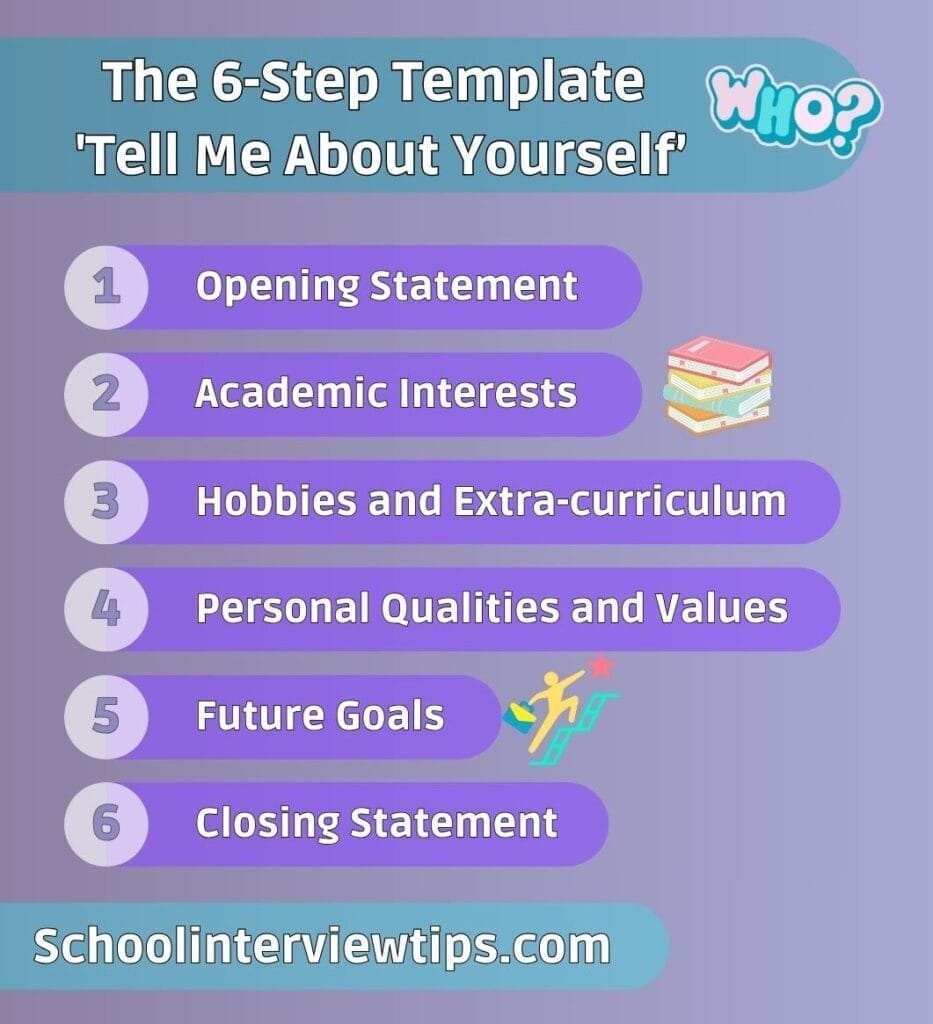
The 6-Step Template to Master ‘Tell Me About Yourself’
10 Powerful Tips to Ace Your Interview – Read more Hear