
Parent Interview Guide: Showcasing Your 6-Year-Old Boy’s Strengths and Potential
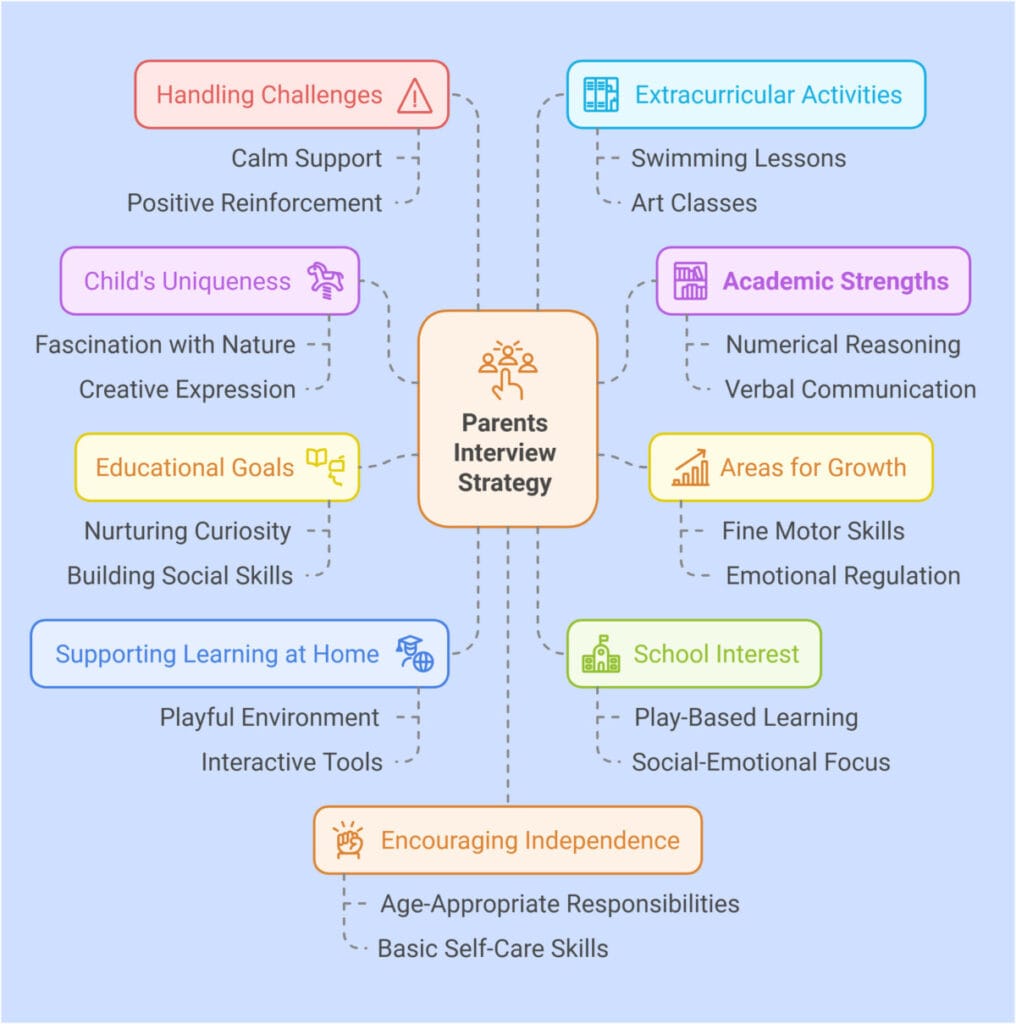
Contents
1. Tell us about your child. What makes them unique?
“Ethan’s uniqueness lies in his boundless curiosity, energy, and empathy. These qualities include:
- A fascination with how things work, paired with a deep interest in exploring connections between people, nature, and the world.
- An innate ability to observe his surroundings and ask thoughtful, insightful questions.
- A creative way of expressing his discoveries through art and storytelling.
For instance, during a recent visit to a local park, Ethan became captivated by how trees support ecosystems. He spent hours observing insects, asking questions about their interactions, and drawing detailed pictures to document his findings. This blend of scientific curiosity and compassion for the natural world makes him truly remarkable.”
2. Academic Strengths and Areas for Growth
“Ethan demonstrates strong foundational skills in:
- Numerical reasoning and pattern recognition.
- Verbal communication, where he expresses his ideas with clarity and enthusiasm.
- Curiosity-driven learning, which fuels his interest in new topics and challenges.
Areas for growth include:
- Improving fine motor skills for writing and drawing.
- Building sustained focus on structured activities.
- Developing patience, emotional regulation, and active listening skills.
To support his growth, we provide gentle guidance and incorporate fun, age-appropriate activities that make learning an enjoyable experience.”
3. Educational Goals
“Our primary educational goals for Ethan are to:
- Nurture his natural curiosity and develop a lifelong love for learning.
- Build foundational social and emotional skills to help him connect with others.
- Encourage critical thinking and problem-solving abilities.
- Support his emerging interests in science, nature, and storytelling.
- Develop resilience, confidence, and patience.
- Create positive associations with education as a joyful and exciting adventure.
Our focus is on holistic development, ensuring Ethan grows intellectually, emotionally, and socially.”
4. Supporting Learning at Home
“We support Ethan’s learning by:
- Creating a playful, exploratory learning environment.
- Using educational games, interactive tools, and daily reading sessions.
- Encouraging questions and hands-on experiences, such as nature walks and simple experiments.
- Turning everyday activities into learning opportunities, like counting items while grocery shopping or exploring colors and shapes during cooking.
- Providing both structure and flexibility to balance academic skills with creative expression.
For example, cooking becomes a science experiment, while trips to the park spark conversations about ecosystems, helping Ethan stay engaged and curious.”
5. Why are you interested in our school?
“We are drawn to your school’s approach to early childhood education, which includes:
- A play-based learning model that encourages creativity and discovery.
- Emphasis on individual development, aligning with our focus on nurturing Ethan’s strengths.
- A strong commitment to social-emotional learning alongside academic growth, supporting holistic development.
- Small class sizes and personalized attention, which suit Ethan’s energetic and curious nature.
The balance between structured learning and creative exploration in your curriculum is precisely what Ethan thrives on, providing the nurturing environment he needs to grow intellectually and socially.”
6. Handling Challenges and Setbacks
“We view challenges as opportunities for growth and approach them by:
- Remaining calm and supportive.
- Helping Ethan understand that mistakes are part of learning.
- Breaking challenges into smaller, manageable steps.
- Using positive reinforcement to celebrate effort and progress.
- Teaching emotional regulation techniques to handle frustration.
- Modeling problem-solving strategies through fun and collaborative activities.
For example, when Ethan struggled with tying his shoelaces, we turned it into a game, practicing together with patience and encouragement. This helped him build confidence while learning an essential skill.”
7. Extracurricular Activities
“Ethan enjoys a variety of activities that reflect his interests and help him grow, such as:
- Swimming lessons.
- Beginner’s soccer, which develops teamwork and coordination.
- Art classes, where he explores creativity through drawing and painting.
- Nature exploration groups, which fuel his curiosity about the environment.
- Music and movement classes that combine rhythm and physical activity.
- Storytelling workshops, allowing him to express himself creatively.
These activities support his motor skills, creativity, and social interaction, while giving him opportunities to explore his passions.”
8. Encouraging Independence
“We encourage Ethan’s independence by:
- Assigning age-appropriate responsibilities, like simple chores.
- Allowing him to dress himself and make choices about his activities.
- Teaching basic self-care skills in a supportive way.
- Providing a safe environment for exploration and problem-solving.
- Praising his efforts and initiatives, even when mistakes happen.
- Gradually increasing his autonomy as he demonstrates readiness.
For instance, we encourage Ethan to solve simple problems on his own before seeking help, helping him build self-reliance and confidence.”
9. Parenting Philosophy
“Our parenting philosophy is built on:
- Unconditional love and support to ensure Ethan feels secure and valued.
- Gentle guidance that respects his individuality and interests.
- Encouraging curiosity and teaching critical thinking.
- Creating a safe, balanced environment where discipline meets freedom.
- Fostering empathy, kindness, and emotional intelligence.
- Celebrating his unique qualities while helping him grow at his own pace.
We aim to raise a confident, compassionate child who approaches life with curiosity, resilience, and a love for learning.”
10. Communicating About School and Learning
“We maintain communication about school by:
- Having daily conversations about his experiences.
- Actively listening and showing genuine interest in his learning.
- Asking open-ended questions to encourage him to share his thoughts.
- Creating a judgment-free space to discuss challenges and frustrations.
- Connecting school concepts to real-world scenarios to keep him engaged.
- Celebrating his efforts and discoveries to build a positive association with education.
Our consistent approach helps Ethan feel supported and excited about learning.”
Inspiring Examples of Parent Interview Perspectives
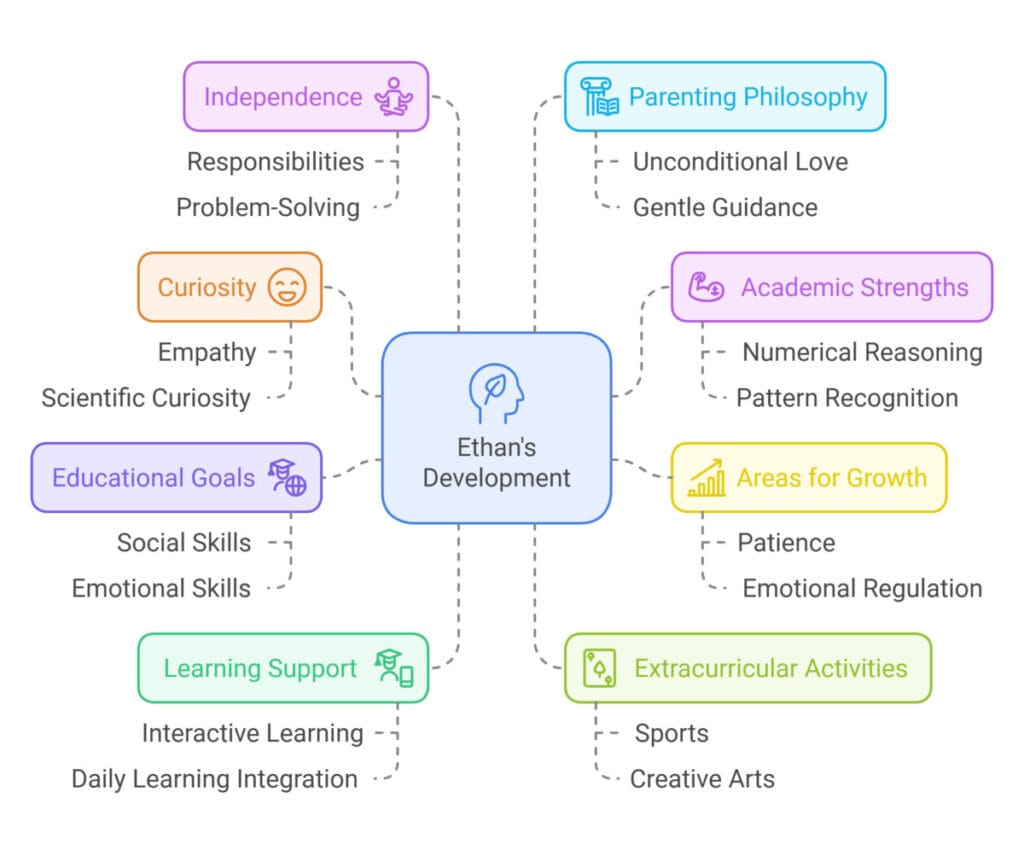
Ethan: The Curious Observer
1. Tell us about your child. What makes them unique?
“Ethan is an incredibly curious and energetic 6-year-old who approaches life with so much enthusiasm. What really makes him stand out is his mix of empathy and scientific curiosity. He’s always asking questions—not just about how things work, but also how they connect to people and the world around him. For example, on a recent trip to the park, he became fascinated by how trees support ecosystems. He spent hours observing insects, asking about how creatures interact, and drawing what he saw. That blend of compassion and observation is something really special about him.”
2. How would you describe your child’s academic strengths and areas for growth?
“Ethan has strong early learning skills, especially in areas like numerical reasoning, pattern recognition, and verbal communication. He’s very curious and loves to explore new ideas. That said, like most kids his age, he’s still working on patience and emotional regulation during challenging tasks. Writing and fine motor skills are also areas we’re focusing on. We’re supporting his growth in these areas through playful and engaging activities that help build these skills gradually.”
3. What are your educational goals for your child?
“Our main goal for Ethan is to nurture his natural curiosity and love of learning. We want him to develop foundational social and emotional skills while building confidence and resilience. It’s really important to us that he sees education as an exciting adventure—something he looks forward to. We’re focused on supporting his intellectual, emotional, and social growth in a balanced, holistic way.”
4. How do you support your child’s learning at home?
“We try to make learning a natural and enjoyable part of Ethan’s daily life. For instance, grocery shopping becomes a math lesson—counting items or identifying colors and shapes. Cooking is a science experiment, and nature walks are perfect opportunities to explore and discover new things. We also read together every day, use educational games and apps, and encourage him to ask questions and explore his interests. Our goal is to create a playful environment where he feels excited to learn.”
5. Why are you interested in our school?
“We’re really impressed with your school’s approach to early education, especially the balance between play-based learning and structured activities. The nurturing environment and emphasis on developing social-emotional skills align perfectly with what we value. Your small class sizes and individualized attention seem ideal for Ethan’s learning style, and we love how your curriculum encourages creativity and exploration. It feels like the perfect place for him to grow and thrive.”
6. How do you handle challenges or setbacks with your child?
“When Ethan faces a challenge, we focus on making it a positive learning experience. For example, when he was learning to tie his shoelaces, he got frustrated at first. We turned it into a fun game, practicing together in small steps and celebrating his effort. We stay calm and supportive, teach him that it’s okay to make mistakes, and focus on breaking tasks into manageable parts. It’s important to us that he learns resilience and feels confident tackling challenges.”
7. What extracurricular activities does your child enjoy?
“Ethan loves swimming lessons, beginner’s soccer, and art classes where he gets to be creative. He’s also part of a nature exploration group and enjoys storytelling workshops. These activities help him develop motor skills, build confidence, and explore his creativity while giving him opportunities to socialize and learn new things.”
8. How do you encourage independence in your child?
“We encourage Ethan’s independence by giving him age-appropriate responsibilities, like helping with small chores or dressing himself. We also let him make decisions, like choosing what to wear or picking an activity for the weekend. If he encounters a small problem, we guide him toward solving it rather than stepping in immediately. Praising his effort and initiative has helped him build confidence in his abilities.”
9. Describe your parenting philosophy.
“Our parenting philosophy is built on unconditional love and respect. We believe in gentle guidance and creating a safe, supportive environment where Ethan feels confident to explore and learn. We try to balance discipline with freedom, encourage empathy and kindness, and celebrate his individuality. Our goal is to raise a child who is curious, compassionate, and eager to embrace the world.”
10. How do you communicate with your child about school and learning?
“We make communication a natural and positive part of our daily routine. Every day, we ask him open-ended questions about his day—what he discovered or what made him happy. We actively listen and celebrate his efforts, no matter how small. Reading together and discussing what he’s learning is a big part of our routine. We make it clear that we’re always available to talk and encourage him to see learning as something fun and exciting.”
Jason: The Imaginative Creator
1. Tell us about your child. What makes them unique?
“Jason is an energetic and imaginative 6-year-old who brings so much joy and creativity to everything he does. He has this incredible ability to think up stories and scenarios, turning even the simplest activity into an adventure. For example, he recently turned our living room into a space station, complete with a control panel he made out of cardboard. He invited us all to be part of his ‘mission to Mars.’ Jason’s creativity, paired with his enthusiasm, makes him so unique. He also has a kind and generous spirit—he’s always the first to share his toys or comfort a friend who’s upset.”
2. How would you describe your child’s academic strengths and areas for growth?
“Jason’s strengths are in verbal communication and storytelling. He loves reading and has a vivid imagination that helps him think through problems in creative ways. He’s also very curious about how things work and enjoys hands-on activities like building with blocks or solving puzzles. One area for growth is his focus during structured tasks. He’s naturally energetic, so we’re working on helping him channel that energy and develop patience when completing activities that require more attention or quiet concentration.”
3. What are your educational goals for your child?
“Our goal for Jason is to nurture his creativity and love for learning while helping him develop the skills he’ll need to succeed, like patience, resilience, and teamwork. We want him to feel confident in his abilities and to see learning as something exciting and rewarding. Most of all, we hope to help him grow into a kind, thoughtful person who isn’t afraid to explore his interests and take on new challenges.”
4. How do you support your child’s learning at home?
“We support Jason’s learning by making it fun and interactive. For example, we turn his love for stories into opportunities for learning—he’ll act out scenes from books or make up his own stories based on what he’s read. We also give him plenty of hands-on activities, like building projects or experiments, to keep him engaged. When he’s learning something new, we tie it to his interests to keep it exciting. For instance, when he was curious about animals, we created a pretend zoo where he learned about habitats and animal behaviors.”
5. Why are you interested in our school?
“We’re drawn to your school because of the emphasis on creativity, exploration, and individualized learning. Jason thrives in environments where he can be hands-on and express himself, and we love how your curriculum balances structure with opportunities for creativity and play. Your focus on nurturing social-emotional skills and fostering a love for learning really resonates with us. We feel this school is the perfect fit to help Jason grow and develop in a way that feels natural and exciting for him.”
6. How do you handle challenges or setbacks with your child?
“When Jason faces challenges, we try to make the process as positive as possible. For example, when he got frustrated trying to tie his shoes, we turned it into a story where he was a superhero learning a special skill. That gave him the motivation to keep trying. We always remind him that mistakes are part of learning and focus on celebrating his effort rather than the result. Breaking tasks into smaller steps and keeping the experience playful really helps Jason feel confident and stay engaged.”
7. What extracurricular activities does your child enjoy?
“Jason absolutely loves activities where he can use his energy and creativity. He’s really passionate about drama and storytelling workshops, where he gets to act out different characters and bring stories to life. He also enjoys building and crafting projects—it’s amazing to see the imaginative creations he comes up with. Soccer is another favorite because it lets him burn off energy while learning teamwork and having fun with friends. On quieter days, he loves drawing and creating his own comic strips, combining his love for storytelling with art. These activities give Jason a wonderful balance of self-expression, physical activity, and social interaction, all while helping him build confidence and explore his interests.”
8. How do you encourage independence in your child?
“We encourage Jason’s independence by giving him opportunities to take charge of simple tasks, like packing his school bag or choosing his outfit for the day. We also let him make decisions in areas like planning weekend activities or picking books to read. When he encounters a problem, we encourage him to come up with solutions on his own first. For example, if he’s trying to build something with his blocks and it keeps falling, we’ll ask questions to guide him but let him figure it out. Praising his efforts helps him feel proud of his accomplishments.”
9. Describe your parenting philosophy.
“Our parenting philosophy is centered on fostering creativity, kindness, and a sense of curiosity. We believe in balancing gentle guidance with giving Jason the freedom to explore and learn from his experiences. We focus on teaching him empathy and encouraging him to express himself while helping him develop resilience and confidence. Our goal is to raise a child who is thoughtful, imaginative, and ready to take on life’s challenges with a positive attitude.”
10. How do you communicate with your child about school and learning?
“We make communication about school a daily habit by asking Jason open-ended questions, like ‘What was the most exciting thing you did today?’ or ‘What made you laugh?’ We keep the tone light and supportive so he feels comfortable sharing. If he’s learning something new, we ask him to explain it to us in his own way—it’s often a fun way for him to process what he’s learned. We also celebrate his efforts, big or small, and make sure he knows we’re always here to listen and support him.”
This highlights Jason’s energetic and imaginative personality while showing how his parents thoughtfully support his learning and development. It’s warm, engaging, and well-suited for a video format.
Lucas: The Thoughtful Explorer
1. Tell us about your child. What makes them unique?
“Lucas is a quiet, thoughtful 6-year-old with a big heart and a love for discovery. He’s the kind of child who takes his time to observe and think things through before diving into anything. What makes him unique is his deep focus and ability to notice details others might miss. For example, when we went to a nature trail, he was the first to spot tiny flowers hidden under leaves or the patterns in tree bark. He has a natural curiosity about how things work—whether it’s watching ants build their colonies or figuring out how a toy is put together. Lucas is also incredibly kind and gentle with others, always ready to share or help someone in need.”
2. How would you describe your child’s academic strengths and areas for growth?
“Lucas’s strengths lie in his observation skills and his ability to concentrate deeply on tasks he finds interesting. He’s especially strong in areas like puzzles, problem-solving, and anything that requires quiet focus, like building models or organizing objects. One area for growth is his willingness to step out of his comfort zone in group activities. He tends to be reserved in social settings and sometimes needs encouragement to join in. We’re working on helping him build confidence in expressing himself and participating in larger group dynamics.”
3. What are your educational goals for your child?
“Our goal for Lucas is to help him build on his strengths while encouraging him to step into new experiences with confidence. We want to nurture his natural curiosity and his love for discovery while also helping him grow socially and emotionally. It’s important to us that Lucas feels comfortable taking risks in learning, whether that’s trying a new activity or sharing his ideas in a group. Overall, we want him to develop a strong sense of self and a love for lifelong learning.”
4. How do you support your child’s learning at home?
“We support Lucas by creating an environment that allows him to explore at his own pace. He loves hands-on activities, so we give him opportunities to experiment and tinker—like building with blocks, creating patterns, or observing nature in our backyard. We also make reading a big part of his day. He enjoys quiet moments with books about animals, space, or how things are made. To help him with social growth, we encourage him to share his projects with family and friends, which has been a fun way for him to open up.”
5. Why are you interested in our school?
“Your school’s approach to individualized learning really stood out to us. Lucas thrives in environments where he can explore his interests and work at his own pace, so we feel your balance of structured and hands-on activities would be a great fit for him. We’re also drawn to your focus on building social-emotional skills. We believe Lucas would benefit from the warm, supportive environment you provide, which would encourage him to step out of his shell while staying true to his thoughtful personality.”
6. How do you handle challenges or setbacks with your child?
“When Lucas faces challenges, we take things step by step to help him feel supported. For instance, if he’s struggling with a puzzle, we’ll encourage him to pause and think about it differently, rather than rushing to solve it for him. We also remind him that making mistakes is okay and part of learning. If he feels frustrated, we help him name his feelings and guide him toward a solution calmly. It’s all about building his confidence and showing him that he’s capable of overcoming challenges.”
7. What extracurricular activities does your child enjoy?
“Lucas loves quiet, focused activities like drawing, building Lego structures, and participating in nature walks. He also enjoys beginner piano lessons, which have been a wonderful way for him to explore music at his own pace. Recently, we introduced him to a small gardening club, and he’s really taken to planting and observing how things grow. These activities give him a chance to explore his interests while building new skills in a way that feels natural for him.”
8. How do you encourage independence in your child?
“We encourage Lucas’s independence by letting him make choices and take ownership of small tasks. For example, he’s responsible for watering his plants in the garden and deciding how to organize his toys. When he’s curious about something, we let him experiment and explore, even if it means things get a little messy. Giving him space to figure things out on his own has helped him build confidence while knowing we’re there for support if he needs it.”
9. Describe your parenting philosophy.
“Our parenting philosophy is centered on patience, encouragement, and understanding. We want Lucas to feel secure in who he is and confident in exploring the world around him. We focus on supporting his natural strengths while gently encouraging him to step outside his comfort zone. Empathy and kindness are big values in our family, and we try to model those for him every day. Ultimately, we want him to grow into a curious, compassionate individual who’s comfortable being himself.”
10. How do you communicate with your child about school and learning?
“We keep communication open and calm, which works well for Lucas. At the end of the day, we ask questions like, ‘What was something new you learned today?’ or ‘What was your favorite part of the day?’ He likes to share when he feels there’s no pressure. When he’s excited about something, we encourage him to teach us about it. It’s a great way for him to process what he’s learned and feel proud of his knowledge. We also make sure to celebrate his efforts, whether it’s completing a task or trying something new.”
This highlights Lucas’s quiet, reflective nature and focuses on his love for exploration and observation. It emphasizes his parents’ supportive approach and how they’re encouraging his confidence and social growth while valuing his unique personality.