
How to Masterfully Address Current Issues in School Interviews

Contents
I. Introduction
In today’s competitive private school admissions landscape, your ability to discuss current issues can set you apart from other candidates. Interview panels are not just looking for students who can recite facts, but for young individuals who demonstrate critical thinking, empathy, and a nuanced understanding of the complex world around them.
Current issues in school interview questions serve multiple purposes in an interview. They assess your:
- Level of global awareness
- Critical thinking skills
- Ability to communicate complex ideas
- Emotional intelligence
- Capacity for balanced and thoughtful analysis
When a school asks about current issues in school Interview, they’re essentially looking to understand how you think, not just what you know. Your response reveals your intellectual curiosity, your capacity for understanding different perspectives, and your potential as a future global citizen.
II. Preparing Your Knowledge Base
A. Staying Informed
Developing a comprehensive understanding of current issues requires a strategic approach to information gathering. Here are some key strategies:
1. Diversify Your News Sources
- Don’t rely on a single media outlet
- Compare reporting from different perspectives
- Use international news sources to gain broader insights
- Follow reputable fact-checking websites
2. Quality Over Quantity
- Prioritize in-depth articles over sensationalist headlines
- Read long-form journalism
- Follow analysis pieces that provide context and nuance
- Subscribe to magazines like The Economist, TIME, or scientific journals
3. Digital Information Literacy
- Learn to distinguish between opinion and factual reporting
- Understand media bias
- Use tools like MediaBiasFactCheck to understand source credibility
- Be wary of echo chambers on social media
B. Building a Comprehensive Understanding
Merely consuming news is not enough. You need to develop a deeper, more analytical approach:
1. Historical Context
- Always ask: “How did we get here?”
- Read historical background of current issues
- Understand the evolution of complex global challenges
- Recognize that most issues have deep, multifaceted roots
2. Interdisciplinary Approach
- Connect issues across different domains
- Understand how economics, politics, technology, and social dynamics intersect
- Look for systemic connections between seemingly unrelated events
- Develop a holistic worldview
3. Academic and Expert Perspectives
- Follow academic podcasts
- Watch lectures from universities on platforms like YouTube
- Read scholarly articles and research papers
- Attend webinars and online discussions by experts
4. Critical Thinking Practices
- Question your own assumptions
- Seek out perspectives that challenge your initial understanding
- Practice summarizing complex issues in your own words
- Develop the ability to see multiple sides of an argument
III. Developing Your Response Strategy
A. The CARE Framework for Answering Current Issues in School Interview Questions
The CARE framework provides a structured approach to crafting compelling responses:

1. Context (C)
- Provide brief, accurate background information
- Demonstrate your understanding of the issue’s origins
- Show how the issue has evolved
- Use concise, clear language
2. Analysis (A)
- Share your thoughtful interpretation
- Go beyond surface-level observations
- Demonstrate critical thinking
- Show the ability to connect different aspects of the issue
3. Responsibility (R)
- Discuss personal and societal roles
- Highlight potential solutions
- Show how individuals can make a difference
- Demonstrate a proactive mindset
4. Empathy (E)
- Acknowledge different perspectives
- Show understanding of various stakeholders
- Demonstrate emotional intelligence
- Avoid being dismissive or judgmental
B. Communication Techniques
Effectively communicating your thoughts on complex issues goes beyond the content of your words:
1. Articulation Skills
- Practice speaking clearly and confidently
- Use precise language
- Avoid filler words like “um” and “like”
- Structure your thoughts logically
- Speak at a measured pace
2. Tone Management
- Maintain a balanced, professional tone
- Show passion without becoming overly emotional
- Demonstrate maturity and thoughtfulness
- Use a conversational yet respectful approach
3. Body Language
- Maintain appropriate eye contact
- Sit up straight
- Use natural hand gestures to emphasize points
- Show engagement through facial expressions
- Appear confident but not aggressive
4. Non-Verbal Communication
- Listen attentively when the interviewer speaks
- Nod to show you’re processing information
- Avoid defensive postures
- Show openness to dialogue
IV. Deep Dive into Specific Issue Categories
A. Technological and Social Innovations
1. AI and Ethics
- Understand both potential benefits and challenges
- Discuss responsible technology development
- Consider ethical implications
- Show awareness of privacy and human impact concerns
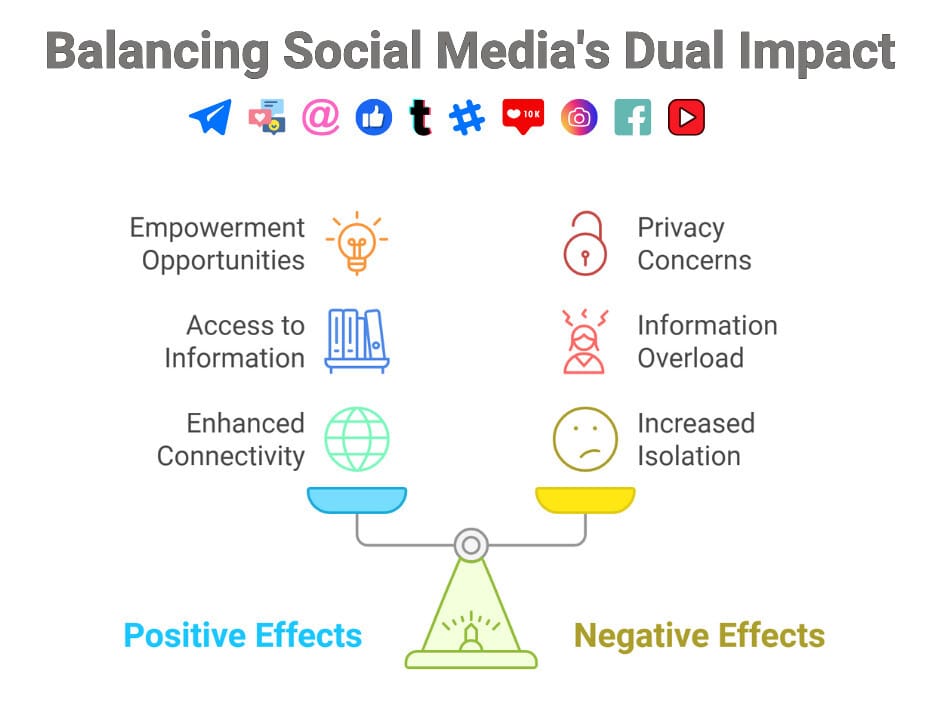
2. Social Media Impacts
- Discuss both positive and negative effects
- Highlight mental health considerations
- Explore digital citizenship
- Show understanding of online communication dynamics
3. Digital Citizenship
- Demonstrate awareness of online responsibility
- Discuss digital safety
- Understand the importance of critical online thinking
- Show mature approach to technology use
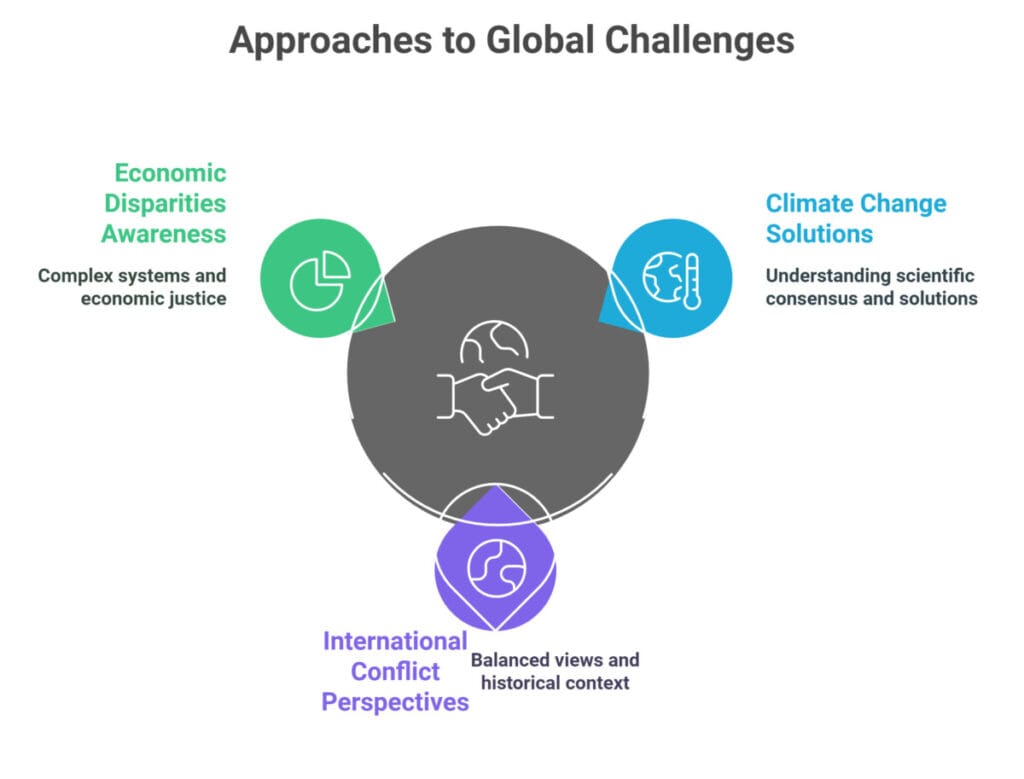
B. Global Challenges
1. Climate Change
- Show understanding of scientific consensus
- Discuss both global and local solutions
- Highlight individual and collective responsibilities
- Demonstrate hope alongside realistic assessment
2. International Conflicts
- Provide balanced perspective
- Understand historical context
- Show empathy for affected populations
- Avoid simplistic or one-sided views
3. Economic Disparities
- Demonstrate understanding of complex economic systems
- Discuss potential solutions
- Show awareness of global interconnectedness
- Highlight importance of economic justice
C. Social Justice and Human Rights
1. Diversity and Inclusion
- Show genuine understanding and respect
- Discuss the importance of representation
- Provide specific, thoughtful examples
- Demonstrate commitment to equality
2. Equity Considerations
- Distinguish between equality and equity
- Show understanding of systemic challenges
- Discuss constructive approaches to addressing inequalities
- Demonstrate empathy and critical thinking
3. Community Engagement
- Discuss ways individuals can make a difference
- Share personal experiences or aspirations
- Show commitment to positive social change
- Highlight the importance of collective action

V. Handling Challenging Aspects of Current Issues
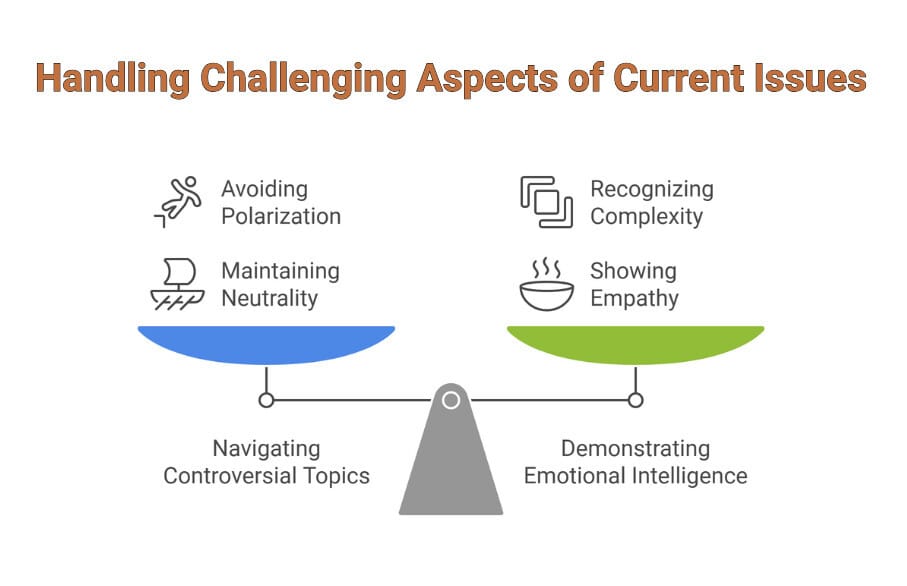
A. Navigating Controversial Topics
1. Maintaining Neutrality
- Present balanced perspectives
- Avoid extreme or polarizing statements
- Show ability to understand multiple viewpoints
- Demonstrate intellectual humility
2. Avoiding Polarization
- Use nuanced language
- Acknowledge complexity of issues
- Avoid absolute statements
- Show willingness to learn and grow
B. Demonstrating Emotional Intelligence
1. Recognizing Complexity
- Show understanding that most issues are multifaceted
- Avoid oversimplification
- Demonstrate ability to hold multiple perspectives
- Show maturity in approaching difficult topics
2. Showing Empathy
- Acknowledge human experiences
- Show compassion for different perspectives
- Demonstrate understanding of varied lived experiences
- Avoid judgment or dismissiveness
VI. Personal Storytelling and Authenticity

A. Incorporating Personal Experiences
1. Connecting Global Issues to Personal Insights
- Share relevant personal anecdotes
- Demonstrate how global issues impact individual lives
- Use personal stories to illustrate broader points
- Ensure stories are genuine and meaningful
2. Using Personal Anecdotes Effectively
- Keep stories concise and relevant
- Highlight personal growth or learning
- Connect personal experiences to larger societal contexts
- Show reflection and self-awareness
3. Showing Personal Growth
- Discuss how your understanding has evolved
- Share moments of changing perspectives
- Demonstrate intellectual curiosity
- Show willingness to learn and adapt
B. Showcasing Individual Perspective
1. Unique Viewpoints
- Offer original insights
- Avoid repeating common narratives
- Demonstrate independent thinking
- Show creativity in approaching complex issues
2. Creative Problem-Solving
- Discuss innovative solutions
- Show ability to think beyond conventional approaches
- Highlight interdisciplinary thinking
- Demonstrate forward-looking mindset
3. Personal Commitment to Positive Change
- Share specific actions you’ve taken or plan to take
- Demonstrate proactive attitude
- Show how you translate understanding into action
- Highlight personal values and motivations
VII. Practical Interview Preparation
A. Mock Interview Techniques
1. Practicing Responses
- Conduct mock interviews with family or teachers
- Record yourself answering potential questions
- Time your responses
- Focus on clarity and concision
- Practice maintaining composure
2. Seeking Feedback
- Ask mentors or teachers to critique your responses
- Be open to constructive criticism
- Work on specific areas of improvement
- Develop self-reflection skills
B. Self-Reflection Exercises
1. Journaling About Current Issues
- Regularly write about global events
- Analyze your own thoughts and biases
- Track your evolving understanding
- Practice articulating complex ideas in writing
2. Developing Personal Stance
- Create a personal framework for analyzing issues
- Identify your core values
- Understand the basis of your perspectives
- Practice nuanced thinking
3. Continuous Learning Mindset
- Stay curious
- Embrace new information
- Be willing to change your mind
- View learning as an ongoing process
VIII. Common Pitfalls to Avoid

A. What Not to Do
1. Overly Emotional Responses
- Avoid becoming defensive
- Stay calm and composed
- Manage strong feelings
- Maintain professional demeanor
2. Lack of Nuance
- Don’t oversimplify complex issues
- Avoid absolute statements
- Show depth of understanding
- Demonstrate ability to see multiple perspectives
3. Repeating Media Talking Points
- Develop original insights
- Go beyond surface-level information
- Show critical analysis
- Demonstrate independent thinking
B. Red Flags for Interviewers
1. Closed-Mindedness
- Show openness to different perspectives
- Demonstrate flexibility in thinking
- Avoid rigid or dogmatic views
- Be willing to acknowledge limitations in your understanding
2. Lack of Empathy
- Show compassion for different experiences
- Demonstrate understanding of diverse perspectives
- Avoid judgmental language
- Show emotional intelligence
3. Inability to Consider Multiple Perspectives
- Practice seeing issues from different angles
- Show ability to understand complex viewpoints
- Demonstrate intellectual humility
- Avoid tribal or polarized thinking
IX. Conclusion
Mastering the art of discussing current issues in private school interviews is about more than just knowing facts. It’s about demonstrating critical thinking, emotional intelligence, and a genuine commitment to understanding the world around you. By developing a comprehensive approach to learning, practicing thoughtful communication, and maintaining an open and empathetic mindset, you can transform these interview questions from potential challenges into opportunities to shine.
Remember, schools are looking for students who are not just knowledgeable, but who are thoughtful, compassionate, and eager to make a positive difference in the world.
X. Additional Resources
Recommended Reading
- The Economist
- Foreign Policy
- Scientific American
- The Atlantic
Websites for Current Affairs
- Reuters
- Associated Press
- BBC News
- NPR
- AllSides.com (for balanced news perspectives)